

Preparing a home for sale covers four kinds of work: repairs, cleaning, decluttering and staging. It also covers a question many sellers leave too late, which is whether past work on the home was done with the right permits. This chapter explains each step and sets out what to find out before the home goes on the market.
The chapter is part of the selling a home guide. It runs alongside the seller disclosure chapter, because every repair and every record you find changes what you know about the home, and what you know decides what you must disclose. The listing media chapter covers the photographs that follow this work.
Start with what you know about the home
BCFSA's page on listing your home says the seller is responsible for giving the licensee accurate information about the home, such as the condition of the roof and the hot water heater. The licensee may also need your help with ownership details, the mortgage balance, the assessed value and the zoning.
Make a written list of the work done on the home while you have owned it. For each item, note the year, who did it, and whether a permit was issued. Add anything you learned from the previous owner. Then collect the paperwork: invoices, warranties, permits, final inspection records and any reports from inspectors or engineers. Gaps in this list are the questions to answer before you list.
Past work done without a permit
Permits are required for more than new houses. Coquitlam's building permit questions say permits are needed for new construction, additions and alterations to existing construction, and that the permit is required before the work begins. The same page lists building a new secondary suite, or legalizing an existing one, as work that needs a permit. It also notes that work that does not need a permit must still comply with city bylaws and the BC Building Code.
Port Coquitlam's building permits page says a permit is required before you build, demolish, repair or alter a building or structure, including carports, decks and pools, and before interior renovations or changes to plumbing and furnaces. It warns that if work is done without a permit, the owner might be required to tear it down and start again with proper permits. It also says buyers will avoid buildings with unauthorized construction.
Missing permits matter to your sale in a specific way. Section 59 of the Real Estate Services Rules lists a lack of appropriate municipal building and other permits as a material latent defect. Your licensee must disclose a known material latent defect to buyers before any agreement is made. BCFSA's page on material latent defects gives new electrical or gas installations or renovations done without proper permits and inspections as an example.
What to establish before you list
Before you list, try to answer these questions about each piece of past work.
- What work was done, and when?
- Was a building or plumbing permit issued, and did the work pass its final inspection?
- Was electrical or gas work covered by a permit? Coquitlam's page notes that these permits and inspections are handled by Technical Safety BC.
- Does the city hold plans or a survey for the home? Coquitlam says its Building Division may hold these, depending on the age of the home, and can provide them for a fee to an owner who shows proof of ownership.
- If a permit is missing, what does the city say about the options? Ask the Building Permits office directly.
Take the answers to your licensee. Together, decide how the work will be described to buyers. If the answer is unclear or the matter is serious, get legal advice before listing. A problem found by a buyer's inspector after an offer is accepted gives you less time to respond than a problem you found yourself.
Repairs
Repairs fall into two groups. The first group affects safety, water entry or the working of the main systems. The second group is cosmetic, such as worn paint or a loose handle. Start with the first group, because these items are the most likely to affect a buyer's inspection, a lender's view of the home and your disclosure.
Get written quotes before you commit. Keep the invoice for every repair, and ask whether the work needs a permit. A repair done with a permit and a final inspection gives a buyer a record they can check. For a defect you decide not to repair, talk to your licensee about how it will be disclosed.
A pre-listing inspection is one way to find out what a buyer's inspector may see. If you order one, you will know what it finds, and that knowledge affects your disclosure. Discuss this with your licensee before booking.
Cleaning and decluttering
Cleaning lets buyers see the condition of the home. Clean windows, floors, walls, kitchens and bathrooms before the photographs are taken, and keep the home at that standard while it is being shown. Pay attention to entrances, because they are the first room a buyer walks through.
Decluttering means removing what you do not need during the sale. Clear counters and floors. Open up closets and storage rooms so buyers can judge their size. Take out personal papers, medicines, keys and valuables before any photographs or visits. Decide where the removed items will go, such as a storage unit or a relative's garage, before you start. The showings chapter explains why documents and valuables need to be secured during visits.
Staging
Staging arranges furniture and decor so buyers can see how each room is used. It can be done with your own furniture or with rented pieces. The journal article on staging a home in Metro Vancouver looks at staging choices in more detail.
Keep the staging in the room and the photographs true to the room. BCFSA's consumer guide to advertising says advertising for your listing must be truthful, and names digitally altered or enhanced photos as a form of false or misleading advertising. Ask your licensee how any virtual staging, if used, would be labelled.
If a tenant lives in the home, the province's page on rental property showings says the landlord may not stage the rental unit without the tenant's consent. Ask first and record any agreement in writing.
The outside of the house
Buyers see the outside first, in the photographs and again when they arrive. Walk around the house with a notebook. Look at the roof, the gutters and downspouts, the drainage around the foundation, the fences, the decks and stairs, the driveway and the paths. Note anything broken, loose or blocked. Clear gutters, cut back plants that touch the walls or cover windows, and repair steps and railings that move.
Decks, retaining walls and accessory buildings raise the same permit questions as work inside. Port Coquitlam's building permits page names decks, carports, pools, retaining walls and accessory buildings among the structures its permit rules cover. Coquitlam's page lists some structures that do not need a permit, such as a deck less than 0.6 metres above grade, a retaining wall under 1.2 metres high, and a storage shed under 10 square metres. It adds that this work must still comply with city bylaws and the BC Building Code, and a shed must meet the setbacks in the Zoning Bylaw. A retaining wall over 1.2 metres needs a permit and must be designed by a professional engineer. If you built or replaced any of these, add them to your list of past work.
Budget and timing
Set a budget for preparation before you start, and decide which work must be finished before the photographs. Some work depends on trades who may not be free for several weeks. A permit adds the time the city needs to review the application and inspect the work. Ask each trade and the city for their time estimate in writing, and plan the listing date around the answers.
Keep a list of what you spent and on what. Your accountant may ask for it later, and a buyer may ask what was done and when. The completion day chapter covers the costs you pay when the sale completes.
Putting the preparation in order
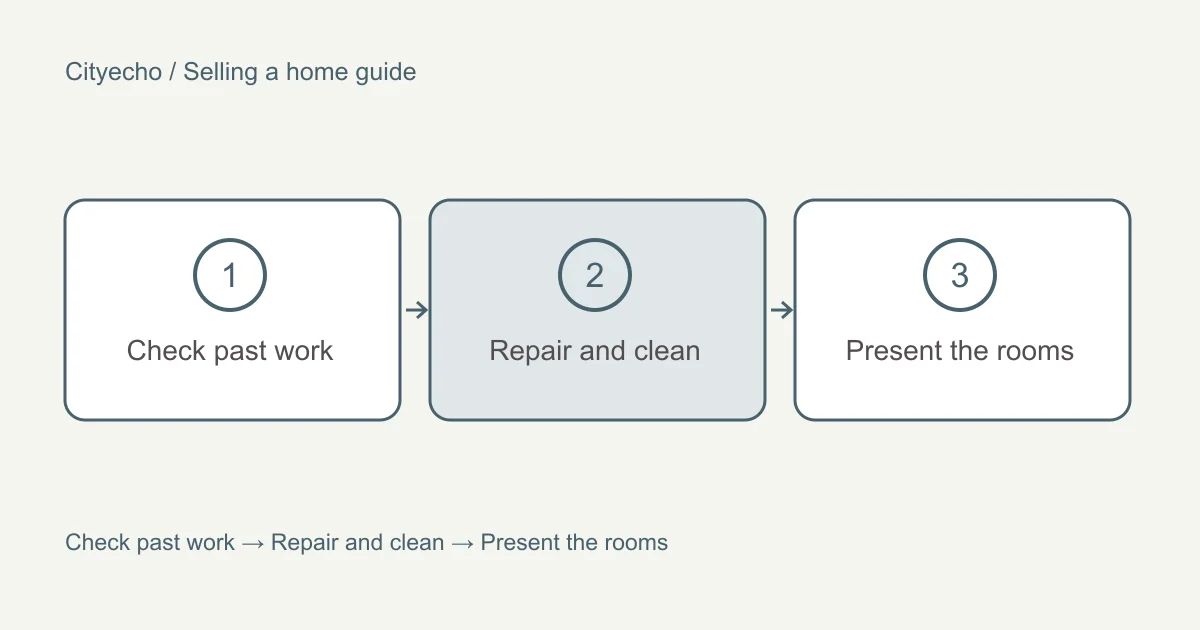
A simple order works for most homes. Check the permit history and gather the records first, because the answers may change your plans. Make the repairs that affect safety and water next. Then clean, declutter and stage. Book the photographs last, when the home looks the way it will look for buyers.
Keep a copy of every record you gathered in one folder. Your licensee will use it when answering buyers' questions, and your lawyer or notary may need parts of it later. The pricing chapter explains how the work you did affects the comparison with recent sales.