

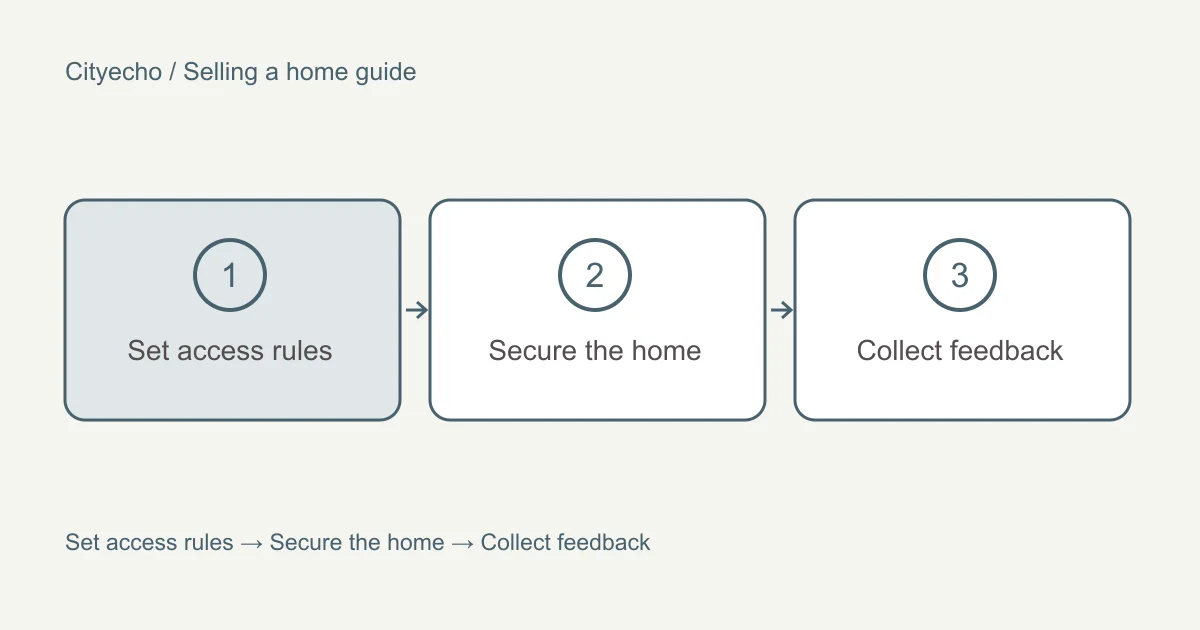
A showing is a private visit by one buyer, usually with their licensee. An open house lets several buyers visit during set hours. Both put strangers in your home, so each needs planning: who gets in, how, when, and what is secured before they arrive. When a tenant lives in the home, provincial law also sets rules on notice and entry.
This chapter is part of the selling a home guide. It follows the listing media chapter, because buyers arrive with the photographs and floor plan in mind. The feedback you collect here is what you review with your licensee when you look again at the price, as the pricing chapter explains.
Deciding how buyers get in
Start by agreeing the access rules with your licensee. Decide which days and hours showings may be booked, how much notice you need, and how each showing will be confirmed. Decide whether you will leave during visits, and where pets will go.
Ask who will be present. Some sellers want their own licensee to attend every showing. Others accept visits led by the buyer's licensee alone. Ask how keys are handled, whether a lockbox will be used, and how the brokerage records which licensee entered and when. Keep a copy of the showing record so you can match it with any later question about the home.
If the home is empty because you have already moved, plan regular checks. Someone should walk through after each visit to lock doors and windows, turn off lights and check the heating.
Securing belongings and documents
Before the first visit, remove or lock away anything a visitor should not see or take. The list includes identity papers, bank and tax records, mail, keys, medicines, cash, jewellery and small electronics. Put away anything that shows your family's names, school or work schedules, or travel plans.
Think about papers related to the sale as well. Offers, the listing agreement, disclosure documents and notes about your price should stay out of sight. Section 30 of the Real Estate Services Rules requires your brokerage to keep information about you confidential. BCFSA's page on agency and your licensee explains that this duty continues after the relationship ends. Your own care with papers in the home supports that duty.
Tell your licensee in writing what may be said to visitors. Your reason for selling, your moving date and your lowest acceptable price are examples of information you may want kept private.
When a tenant lives in the home
A tenancy continues through a sale. The province's page on selling a rental property states that the tenancy continues when a landlord plans to sell, that a landlord cannot end a tenancy because they want to sell, and that the tenant has a legal right to peace and quiet while the tenancy continues. After the sale, the buyer becomes the new landlord on the same terms.
The entry rules come from section 29 of the Residential Tenancy Act. A landlord must not enter a rental unit unless the tenant gives permission at the time or within 30 days before, or the landlord gives written notice at least 24 hours and not more than 30 days before the entry. The notice must state a reasonable purpose and the date and time of entry. The time must be between 8 a.m. and 9 p.m. unless the tenant agrees otherwise.
The province's page on rental property showings applies these rules to a sale. The table summarizes its main points.
| Topic | What the province says |
|---|---|
| Notice | Written notice of entry is required, and it cannot be sent by text message. |
| Schedule | Ideally agreed in writing. Otherwise, 24 hours written notice for each showing. |
| Presence of the tenant | The tenant may be present, and cannot be required to leave. |
| Presence of the landlord | The landlord or the landlord's agent must be present when the unit is shown to buyers. |
| Lockbox | Allowed only with the tenant's permission, and the landlord or agent must still attend every showing. |
| Belongings | The landlord or agent must ensure the safety of the tenant's possessions. |
| Staging | Not allowed without the tenant's consent. |
| Unreasonable entry | For example, all-day showings every Saturday for several weeks. |
A tenant who believes entry is unreasonable or unlawful can apply to the Residential Tenancy Branch for dispute resolution. The province adds that once proper notice is given, the tenant must not prevent access, and that the landlord can show the unit even if the tenant is not home.
Open houses
An open house brings several buyers or licensees into the home at once, which means less direct supervision of each visitor. Walk through the home before it starts, and again after it ends. Check that doors and windows are locked, and that nothing is missing.
For a rented home, the province recommends agreeing the open house terms and schedule with the tenant in writing. If you cannot agree, you may give the tenant a notice of entry with the date and time of the open house. The province warns landlords to avoid holding several open houses in a short period, because they can disrupt the tenant. The tenant may stay during the open house. Tenants who will be out should secure valuables and restrain or remove pets. Tenants must not interfere with the landlord's right to seek a buyer, which the province says can include comments about the landlord or the condition of the home.
The journal article on buying a tenanted home explains how buyers see a home with a tenant in place, which helps you prepare for their questions.
If a buyer wants the home empty
A buyer of a tenanted house may want to live in it after completion. The province's page on selling a rental property sets out two ways a tenancy can end so that the buyer or a close family member can live there. In the first, the buyer gives the seller a written request before taking possession, and the seller gives the tenant a Three Month Notice to End Tenancy for Purchaser's Use. The province states that serving this notice cannot be a condition of the sale. In the second, the buyer serves a three month notice after taking possession and becoming the landlord.
The province says these notices must be generated through the Residential Tenancy Branch web portal, and that any other version is legally unenforceable. The landlord who serves a three or four month notice must compensate the tenant with an amount equal to one month's rent. The province also states that tenants have 21 days to apply for dispute resolution after receiving a three month notice.
These rules affect your dates. If a buyer plans to live in the home, discuss the notice timing with your lawyer or notary and your licensee before you accept the offer, so the completion and possession dates allow for it.
Visits after an offer is accepted
Some visits continue after you accept an offer. While conditions are open, the buyer may return with an inspector, an appraiser for the lender, or a contractor for a quote. Ask your licensee to book these visits in the same way as showings, with a confirmed date and time, and secure the home in the same way before each one. Keep a note of who attended. If a tenant lives in the home, each of these entries needs its own written notice or the tenant's permission under section 29.
Collecting and using feedback
Feedback is the information buyers' licensees give after a visit. Ask your licensee to request it after each showing and to record it in writing with the date. Useful feedback is specific. A comment about the size of the second bedroom or the age of the windows tells you more than a general remark.
Review the feedback on a date you set in advance, so you can see the pattern across visits. Look for points that repeat across several visits. A repeated comment about condition may point to a repair. A repeated comment about price compared with other homes may point to a review of the list price. If a buyer's comment reveals a defect you did not know about, speak to your licensee, because it may affect what you must disclose, as the seller disclosure chapter explains.
When offers start to arrive
Showings often lead to offers during the same period. Keep the showing schedule going until you and your licensee decide otherwise. Some sellers set a date for reviewing offers, which gives buyers time to visit first. The reviewing offers chapter explains how offers are presented and compared.