

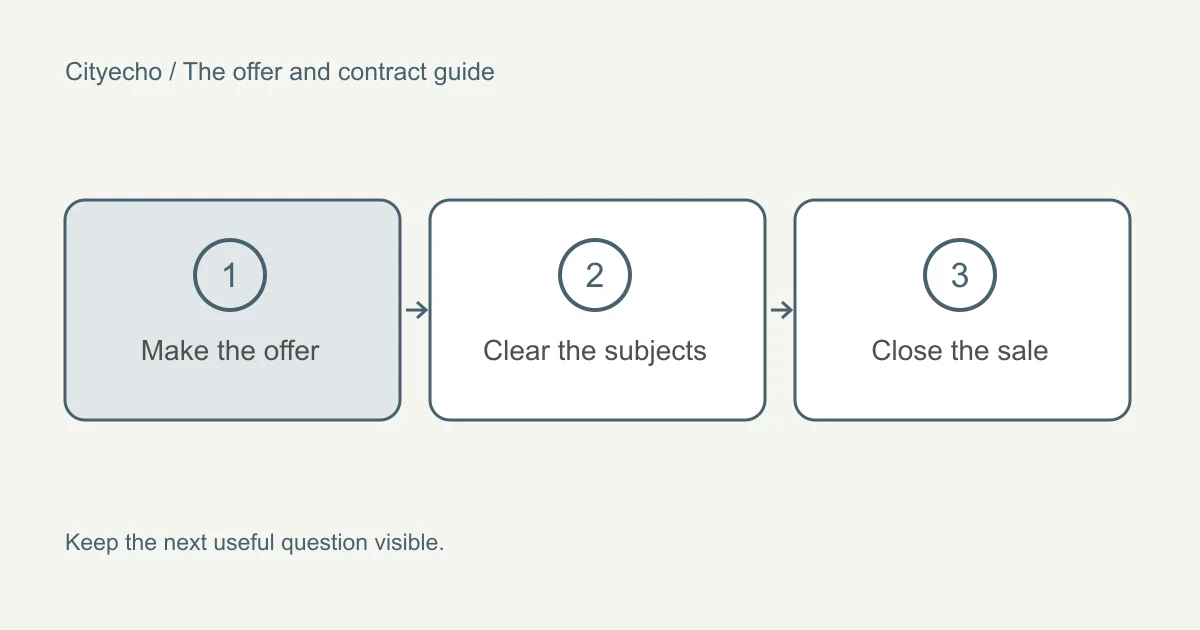
A residential offer in British Columbia is a short document that lives inside a strict legal frame. The buyer writes a price and dates on the Contract of Purchase and Sale, the seller accepts, and the contract becomes binding. From that moment the Property Law Act, the Real Estate Services Act and the regulations under each one govern what the licensees must do, what rights the buyer keeps and how the deposit, the subjects and the completion date interact. This hub covers each step in order, with a chapter for the subjects, a chapter for the deposit, a chapter for competing offers, a chapter for the rescission period, a chapter for assignments and a chapter for the day the deal falls apart.
Each chapter cites the primary source behind the rule. The contract chapter links the contract of purchase and sale page. The subjects chapter is at subject conditions. The deposit rules are at deposits and trust accounts. Bidding against other offers is at multiple offers and bidding. The 3 business day right is at the Home Buyer Rescission Period. The assignment rules are at assignments of contract. The remedies when a deal collapses are at when a deal collapses. The home buying guide covers the search and viewing stage. The financing a home guide covers the mortgage. The costs and taxes guide covers the one-time charges on completion day.
Keep these points beside your contract
- The contract is binding once accepted. A written amendment, signed by both parties, is the only way to change a term after acceptance.
- Verbal promises do not bind the sale. The Law and Equity Act section 59 requires a contract for land in writing and signed.
- The deposit is held by a brokerage in trust under the Real Estate Services Act section 28, not by the seller.
- Subject conditions are negotiated. The rescission period is statutory and cannot be waived.
- A time clause lets a seller continue to market a subject-to-sale offer. The buyer must know how long the clause gives them to remove.
- A seller can refuse an assignment unless the contract says otherwise. The Real Estate Services Regulation section 8.2 sets out two standard terms every licensee-drafted residential contract carries.
- A collapsed deal usually turns on the deposit and the measure of damages. The Supreme Court of British Columbia decides, not the brokerage.
Write the offer with the right form in front of you
The Contract of Purchase and Sale is a standard form used across British Columbia for residential transactions. A real estate licensee registered with BC Financial Services Authority prepares the form, writes in the terms the buyer wants and presents the offer to the seller. The BCFSA offers practice resource, read on 5 October 2026, is the regulator's guidance on how a licensee runs the step from drafting the offer to presenting it, carrying the required disclosures and handling the acceptance.
The written form matters because the Law and Equity Act section 59, read on 5 October 2026, states that a contract for the disposition of land is not enforceable unless it is in writing and signed by the party to be charged, or an exception applies. A verbal offer or a text message agreement is not binding. The contract chapter covers the parts of the standard form, the disclosures the licensee must give before the offer is signed, and the common amendments and addenda a buyer encounters in the Lower Mainland.
Use subject conditions to buy time for the checks
Most buyers write their offer subject to financing, subject to inspection and, for a strata or townhouse purchase, subject to review of the strata documents. The subjects let the buyer complete the due diligence that cannot fit between the first viewing and the acceptance. If a subject is not removed in writing by its deadline, the contract ends and the deposit comes back to the buyer under the contract and the brokerage's trust rules. If every subject is removed, the contract is firm and the buyer owes the balance of the deposit under the contract's terms.
The subject conditions chapter covers each common subject, the language that waives versus the language that fulfils, and the time clause a seller may add to a subject-to-sale offer. The home inspection chapter in the due diligence guide covers the inspection subject and the Consumer Protection BC rules that apply to the inspector. Our subject-free offers article in the journal covers the risks of writing a clean offer in a competing-offer situation.
The deposit sits in a brokerage trust account
Real Estate Services Act section 28, read on 5 October 2026, states that if a brokerage holds the money in a brokerage trust account, then despite any rule of law to the contrary, the brokerage holds that money as a stakeholder and not as agent for one of the parties. Section 26 requires those trust accounts to be interest-bearing accounts held with a savings institution in British Columbia. A buyer pays the deposit to the brokerage after acceptance, with the exact timing and amount set out in the contract.
If the deal completes, the deposit forms part of the purchase price and the lawyer or notary applies it to the balance due. If the deal collapses, section 33 of the Act, read on the same date, states that if adverse claimants appear, the brokerage may apply to the Supreme Court for an order for payment of the money into court. The deposits and trust accounts chapter sets out the amounts and timing, the release form the parties sign on completion, and the mechanics of the interpleader application when the parties disagree. The deposits and adjustments chapter in the costs and taxes guide covers the related statement of adjustments.
Bid with the full picture when there are competing offers
In a seller's market an offer competes against other written offers presented the same day. BCFSA's offers knowledge base page, read on 5 October 2026, is the regulator's guidance on how a licensee handles the step, including the disclosure the listing licensee must give to competing buyers about the number of offers in play. A licensee cannot share the content of one buyer's offer with another buyer. The multiple offers and bidding chapter covers backup offers, escalation clauses and the pattern Michael Lee sees most often in Coquitlam and Port Coquitlam. Our multiple offers article in the journal shows the seller's side of the same step.
Use the rescission period only when the subjects are gone
Property Law Act section 42, read on 5 October 2026, states that a purchaser of residential real property may rescind the Contract of Purchase and Sale by serving written notice on the seller within the prescribed number of days after the acceptance was signed. B.C. Reg. 175/2022 section 4 sets that number at 3 business days. Section 6 of the regulation sets the rescission fee at 0.25% of the purchase price. Section 7 states the right of rescission cannot be waived. Section 3 lists the exclusions: property on leased land, a leasehold interest, a sale at auction and a sale under a court order or court supervision.
The right runs beside the subject conditions, not instead of them. A buyer who writes a subject-to-inspection offer uses the subject to walk away without the fee. A buyer who writes a subject-free offer, which is common in a competing-offer scenario, keeps the rescission period as a last-check window. The Home Buyer Rescission Period chapter covers the mechanics of serving notice, how business days are counted and how the rescission fee is paid.
Assignments and the Canada Revenue Agency
The Real Estate Services Regulation section 8.2, read on 5 October 2026, states that a contract for the sale of a residential property prepared by a licensee must include two terms unless the licensee is told in writing not to: that the contract may not be assigned without the written consent of the seller, and that the seller is entitled to any profit from an assignment of the contract by the buyer. If the licensee is told to leave the two terms out, section 8.2(6) requires the licensee to give the seller a Notice to Seller Regarding Assignment Terms, in a form approved by the superintendent, that advises the seller to obtain independent professional advice.
A separate rule applies on new construction. Canada Revenue Agency GST/HST Info Sheet GI-120, read on 5 October 2026, states that effective May 7, 2022, all assignment sales in respect of newly constructed or substantially renovated residential housing are taxable for GST or HST purposes. The assignments chapter covers the two standard contract terms, the Notice to Seller and the federal tax rule, with worked examples for the Coquitlam presale and resale markets. Our assignment clauses article in the journal shows what a typical assignment addendum looks like.
When a deal collapses
A deal collapses when a subject is not removed, when a buyer refuses to complete after subjects are removed or when a seller refuses to deliver clear title on completion day. The remedy depends on which side is in default and how the deposit sits. Law and Equity Act section 24, read on 5 October 2026, states that the court may relieve against all penalties and forfeitures, and in granting the relief may impose any terms as to costs, expenses, damages, compensations and all other matters that the court thinks fit. A buyer in default usually loses the deposit under the contract, and the seller sues for damages for any shortfall against the resale price.
The collapsed deals chapter covers the written release the parties sign to release the deposit, the Supreme Court process when they disagree, the measure of damages the seller may claim and the specific performance remedy the buyer may seek. A lawyer who litigates real estate disputes handles the court steps. The guide names the law and the forum, not the strategy for a particular file.
Use this guide with your lawyer and your licensee
| Who | What they decide | Chapter |
|---|---|---|
| Buyer's licensee | How the offer is drafted and the subjects chosen | The contract of purchase and sale |
| Lender's underwriter | Whether the financing subject can be removed | Financing a home: the mortgage application |
| Home inspector | What the inspection report flags | Due diligence: home inspection |
| Buyer's lawyer or notary | Whether the title is clear and the funds are in order | Costs and taxes: legal and registration costs |
| Buyer | Which subjects to use and when to rescind | Every chapter |
This hub organises the questions and names the statutes behind each step. A licensee registered with BC Financial Services Authority discusses the specific offer. A British Columbia lawyer or notary reviews the contract and registers the transfer on title. The due diligence guide covers the checks a buyer runs during the subject period, and the home buying guide covers the search that comes before the offer.