

A detached house built in the last ten years in Coquitlam or Port Coquitlam may still carry part of its new home warranty. That warranty is a form of insurance, required by law for most new homes in British Columbia, and it follows the house from owner to owner. A buyer who checks can learn how much coverage is left and what it covers. A buyer who does not check may assume coverage that was never there, as with a home built by an owner builder.
This chapter is part of the property checks guide. The journal article on the BC new home warranty covers the 2-5-10 structure in shorter form. Here the focus is on what a resale buyer should establish.
Three kinds of evidence about a warranty
What you can observe: the age of the house, signs of recent construction, and the condition of the finishes. Whether a warranty exists is a question for the registry and the policy.
What a document proves: the entry in BC Housing's New Homes Registry, the warranty policy and certificate, the occupancy permit date from the city, and, for an owner built home, the disclosure notice. The policy itself sets out the coverage.
What needs a professional: whether a defect you see falls within the policy, which a warranty provider decides; whether a defect exists at all, which a home inspector or engineer can assess; and how the contract should deal with warranty documents, which belongs with your lawyer or notary.
Who requires the warranty
The Province's Homeowner Protection Act page says BC Housing's Licensing and Consumer Services Branch administers the Act. That includes residential builder licensing, owner builder authorizations and mandatory home warranty insurance.
Section 22 of the Homeowner Protection Act says a person must not build a new home unless it is registered for coverage by home warranty insurance from a warranty provider. It also says a person must not sell or offer to sell a new home while it is being built, or within 10 years from the date an occupancy permit was first issued, unless the home is covered by home warranty insurance or is exempt. BC Housing's warranty page describes 2-5-10 coverage as required on all new homes built by licensed residential builders.
The coverage periods
Section 22 sets the minimum coverage:
- defects in materials and labour for at least 2 years after the warranty begins;
- defects in the building envelope, including water penetration, for at least 5 years; and
- structural defects for at least 10 years.
BC Housing's page on home warranty insurance for new homes adds detail within the 2 year part. For detached homes, some materials and labour defects are covered for 12 months. Major systems, meaning electrical, plumbing, heating, ventilation and air conditioning, as well as exterior cladding, windows, doors and defects that make the home unfit to live in, are covered for 24 months. The 2 year coverage also includes building code violations that create a health or safety risk or are likely to cause material damage.
BC Housing notes that these are the minimum requirements, and that some policies provide more. Read the policy for the house.
| Coverage | Minimum period | What it covers |
|---|---|---|
| Materials and labour | 2 years, with some detached home items at 12 months | Defects in materials and labour, and certain code violations |
| Major systems, cladding, windows, doors | 24 months | Electrical, plumbing, heating, ventilation, cladding, windows, doors |
| Building envelope | 5 years | Envelope defects, including water penetration |
| Structure | 10 years | Defects in load bearing parts or the overall structure |
When coverage starts and what remains
BC Housing says coverage starts at different times by type of home. For a custom detached home, it begins at occupancy or first occupancy permit, whichever comes first. For a speculative detached home, one built to be sold, it begins at first occupancy or transfer of title, whichever comes first.
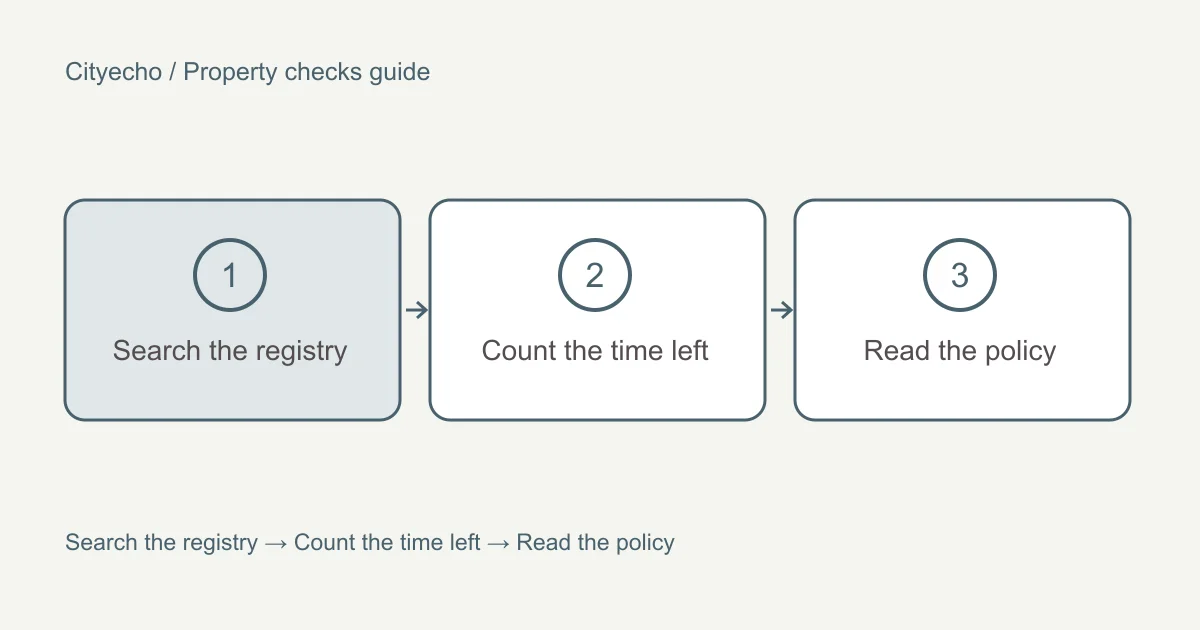
BC Housing also says coverage stays with the home, and the remaining warranty transfers to a new owner when the home is sold. So for a resale house, the useful question is how much time remains on each period on your completion date. Get the start date from the policy or the registry, and the occupancy permit date from the city file. The permits chapter explains how to request that file.
The maximum claim is also set out. BC Housing lists the lesser of the first owner's purchase price or $200,000 for a detached home.
What the warranty excludes
BC Housing says the regulation allows insurers to exclude certain items. It lists general exclusions that can include landscaping, non-residential detached structures, roads, curbs and lanes, and site grading and surface drainage. Driveways are covered. It lists defect exclusions that can include normal wear and tear, labour, materials and design supplied by the owner, damage caused by others or by natural events, and an owner's failure to prevent or minimize damage.
For a buyer, two of these stand out. Drainage across the lot may fall outside the warranty, so the checks in the drainage and services chapter still apply to a new house. And any work the first owner did themselves may be excluded. Ask what the first owner changed.
Owner builder homes
An owner builder is an individual authorized to build a new home for personal use. Section 20 of the Act says an owner builder is not required to obtain home warranty insurance or to be licensed for that home.
The Act puts limits on selling such a home. Section 20.1 says an owner builder must not sell or offer to sell the new home while it is being built, or within a prescribed period after it is built, unless the registrar permits it. The registrar may permit a sale for undue hardship and may attach conditions.
Section 21 requires a disclosure notice. An owner builder, and any later buyer who resells the home, must give a prospective purchaser a notice stating whether the home is covered by home warranty insurance. That duty applies during the period the warranty would have been in effect had it been obtained.
BC Housing's new homes page says the owner builder is responsible for defects for 10 years after occupancy, and that buyers must contact the owner builder directly if defects are found. Section 23 of the Act sets out that protection. It deems the builder, including an owner builder, and the vendor of a new home to have agreed that the home is free of defects in materials and labour for at least 2 years, the building envelope for at least 5 years, and structural defects for at least 10 years, measured from the first occupancy permit or first occupancy. It says any term that tries to waive or limit that protection has no effect, and that an action must start within 10 years of first occupancy.
The difference for a buyer is practical. With warranty insurance, a claim goes to a warranty provider. With an owner built home, BC Housing tells buyers to contact the owner builder directly about defects. Ask your lawyer what that means for the house you are considering.
Questions for the seller of a newer house
Ask the seller, in writing and through your real estate professional, for a short set of documents and answers. Who built the house, and was the builder licensed? What is the name of the warranty provider and the policy number? On what date did coverage start? Have any claims been made, and how were they resolved? Were any repairs done under the warranty, and are there reports? Did the first owner make changes, such as finishing a basement or adding a deck, and were permits issued?
Compare the answers with the registry and the policy. Where the answers differ, write down both versions and the date you received each one. Take the list to your lawyer or notary before you remove subjects. If the house was built by an owner builder, add the disclosure notice and any registrar's permission to sell to the list of documents you ask for.
Checking the registry
BC Housing's page on using the New Homes Registry explains the search. You can search by street address and city or by legal description, and filter for single detached homes. The registry shows whether a new home has a home warranty insurance policy and whether a licensed residential builder built it. If there is no policy, it shows whether the home was built under an owner builder authorization or is exempt.
The registry covers homes registered with BC Housing since November 19, 2007. For a home registered after July 1999 and before that date, BC Housing gives a toll free number, 1-800-407-7757.
Search the address before you make an offer. Then ask the seller for the policy and any claims made. A home inspection remains useful on a new house, because the policy covers defects, and someone still has to find them.