

A detached house in Coquitlam or Port Coquitlam may have a tenant in a suite or in the whole house. When you buy a house with a tenant in it, you buy it subject to that tenancy. The Residential Tenancy Act sets the rules for ending it, and those rules decide when you can move in.
This chapter is part of the property checks guide. The journal article on buying a tenanted home in BC covers the notice timeline in shorter form. If the tenant lives in a suite, read the secondary suites chapter too, because the suite's permit status is a separate question from the tenancy.
Three kinds of evidence about a tenancy
What you can observe: that someone lives in part of the house, how the space is laid out, and whether the tenant is willing to have viewings. You cannot see the terms of the tenancy.
What a document proves: the written tenancy agreement shows the rent, the start date, whether it is a fixed term or month to month, and what is included. Records of the security deposit and pet deposit show what the landlord holds. A notice to end tenancy, if one has been served, shows its date and grounds.
What needs a professional: how the contract of purchase and sale should deal with the tenancy, the notice, the deposits and the possession date. That belongs with your lawyer or notary. The Residential Tenancy Branch can explain the tenancy rules, and it decides disputes.
The tenancy continues after the sale
The Province's page on selling a rental property is plain on this point. When a landlord plans to sell, the tenancy continues. Once the property is sold, the buyer becomes the new landlord and the tenancies continue under the same terms. The buyer and the tenants do not need to sign a new agreement, though they may if both agree. If neither the buyer nor the seller serves a proper notice to end the tenancy, it continues under the original agreement.
Title law points the same way. Section 23 of the Land Title Act lists the exceptions to a registered owner's title. One of them is a lease or agreement for lease for a term of 3 years or less, if there is actual occupation under it. Ask your lawyer how that exception applies to the tenancy in the house you are buying.
So the first document to ask for is the tenancy agreement itself. Read the rent, the term, the end date of any fixed term, and who pays utilities.
Ending the tenancy for your own use
Section 49 of the Residential Tenancy Act lists the grounds on which a landlord can end a tenancy for the landlord's own use of the property. Two of them matter to a buyer.
The first is a notice given by the seller at the buyer's request. Under section 49 (5), the landlord may end the tenancy if the landlord has entered into an agreement in good faith to sell the rental unit, all the conditions on which the sale depends have been satisfied, and the purchaser asks the landlord, in writing, to give notice. The purchaser must be an individual who, or whose close family member, intends in good faith to occupy the unit. A family corporation can also qualify on similar terms. Section 49 (7) says the notice must contain the name and address of the purchaser.
The second is a notice given by the buyer after completion. The Province's page says that once the buyer takes possession and becomes the new landlord, the buyer can serve a three month notice for the landlord's own use.
The Act defines close family member as a person's parent, spouse or child, or the parent or child of that person's spouse. The Province adds that brothers and sisters do not count.
The notice period and the form
Section 49 (2) sets the earliest effective date of the notice. It allows a period to be prescribed by regulation. The Residential Tenancy Regulation, as consolidated to September 22, 2026, prescribes 3 months after the date the tenant receives the notice, for notices given for the landlord's, family corporation's or purchaser's use.
Section 49 (2) also says the effective date must be the day before the day in the month that rent is payable, and, for a fixed term tenancy, not earlier than the end of the fixed term. Both rules can push your move in date later than a simple three month count.
The form matters. The Province says the landlord must generate the Three Month Notice to End Tenancy for Purchaser's Use, form RTB-32P, or for Landlord's Use, form RTB-32L, through the Residential Tenancy Branch web portal. It says any other form of notice is legally unenforceable. It also says that serving the notice cannot be a condition of the sale.
The tenant's rights after notice
A tenant can dispute the notice. Section 49 (8) of the Act allows a prescribed dispute period, and the regulation sets it at 21 days after the tenant receives the notice. If the tenant does not apply in time, section 49 (9) says the tenant is presumed to accept that the tenancy ends on the effective date and must move out by then.
A tenant who receives the notice can also leave sooner. Section 50 lets a tenant end the tenancy early by giving at least 10 days' written notice and paying rent only up to that date.
Compensation the law requires
Section 51 (1) says a tenant who receives a notice under section 49 is entitled to an amount equal to one month's rent, on or before the effective date. The tenant may withhold it from the last month's rent instead. The Province's page adds that this compensation is owed even if the tenant gives notice to leave earlier.
Section 51 (2) adds a larger payment if the stated purpose is not carried out. The landlord, or the purchaser who asked for the notice, must pay the tenant an amount equal to 12 times the monthly rent, unless they show two things. The stated purpose was accomplished within a reasonable period after the effective date. And the unit was used for that purpose for at least 12 months. The Act allows a regulation to set a shorter period of at least 6 months, so ask your lawyer which period applies on the date of your notice. The director of the Residential Tenancy Branch may excuse the payment where extenuating circumstances prevented it. The Province's eviction notice page repeats that a landlord may have to pay 12 months' rent if the unit is not used for the stated purpose.
For a buyer, this means a purchaser's notice is a commitment. If your plans could change, discuss that with your lawyer before you ask the seller to serve it.
| Step | Rule | Source |
|---|---|---|
| Sale conditions satisfied | Required before a purchaser's notice | Residential Tenancy Act, s. 49 (5) |
| Purchaser's written request | Must come from the purchaser | Residential Tenancy Act, s. 49 (5) |
| Notice period | 3 months, ending the day before rent is due | Regulation and s. 49 (2) |
| Dispute period | 21 days after the tenant receives the notice | Residential Tenancy Regulation |
| Compensation | One month's rent | Residential Tenancy Act, s. 51 (1) |
| Purpose not carried out | 12 times the monthly rent, unless excused | Residential Tenancy Act, s. 51 (2) |
Deposits and money owed
The Province's page says the person who owns the property when the tenant moves out is responsible for returning the tenant's security deposit or pet deposit. That may make the buyer responsible, even though the seller held the money. It suggests the buyer and seller deal with the transfer of deposits in the contract of sale or the closing settlement, and handle any money the tenant owes the seller the same way.
What not to assume about vacant possession
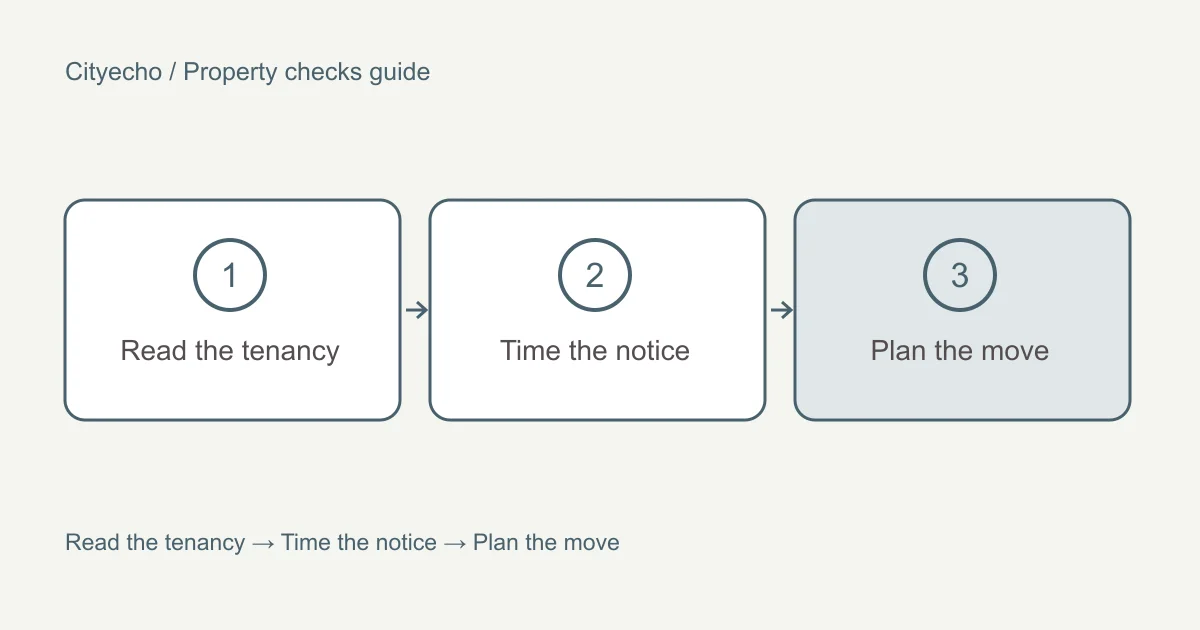
Do not assume the house will be empty on the completion date. A contract can name a possession date, but the tenancy law sets when a tenant must leave. Build your timeline from the rules above: the date all conditions are satisfied, the date the tenant receives the notice, three months, the next rent day, and the end of any fixed term. Then allow for a possible dispute.
Here is a hypothetical example. A month to month tenant pays rent on the first of each month and receives a valid purchaser's notice on March 10. Three months after March 10 is June 10. The effective date must also be the day before rent is due, so the earliest end date becomes June 30. If the tenant applies for dispute resolution within 21 days, the Residential Tenancy Branch decides the outcome, and your plans wait for that decision.
Tell your insurer that the house is tenanted. The Financial Consumer Agency of Canada's home insurance page says that if you rent part of your home, you must inform your insurance company. Ask your lawyer or notary to write the tenancy terms into the contract, and keep the pillar checklist in view so the notice timeline sits beside your other deadlines, such as the home inspection.