
Heritage Woods, Heritage Mountain and Ioco: The Hillside Side of Port Moody
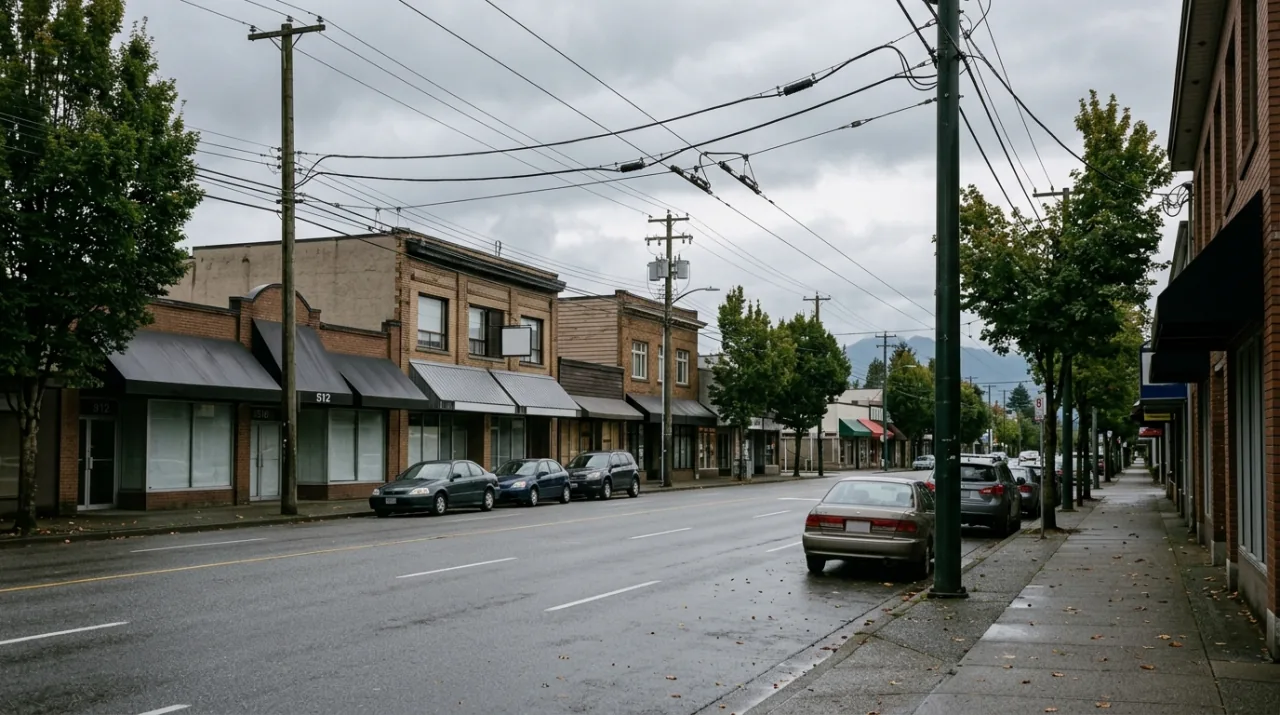
Port Moody has two housing markets, and a map does not make the difference obvious. Down on the flat are Moody Centre, Newport Village, the waterfront and the two SkyTrain stations. Then the ground climbs.
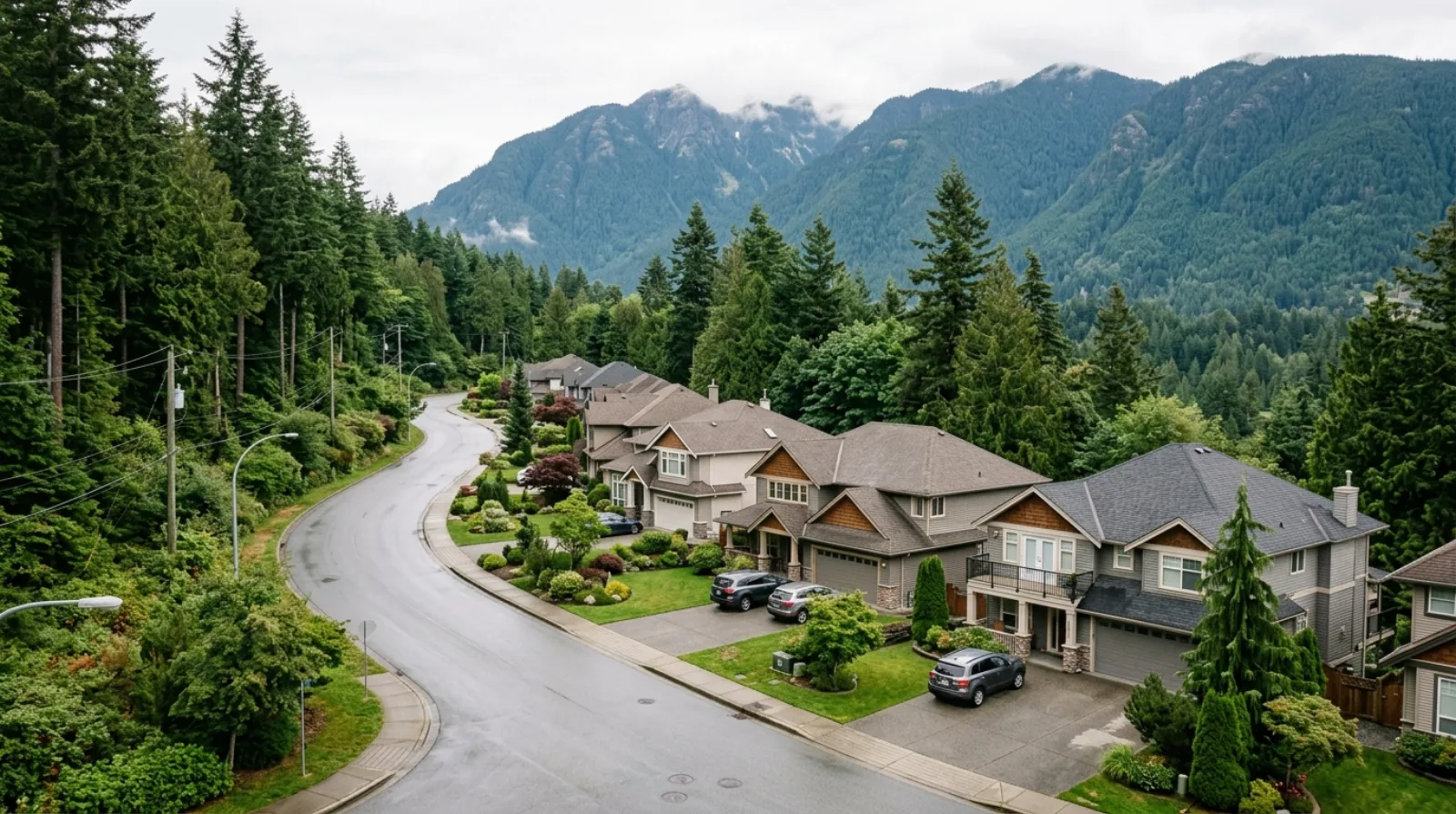
North east of the town centre, the hillside rises steeply from Burrard Inlet into forest. That is where Heritage Mountain, Heritage Woods and Twin Creeks were built, and where the 1920s Ioco townsite sits at the bottom near the old refinery lands. Different housing, different commute, different daily routine.
The geography, from the water up
Start at the shoreline and work upward.
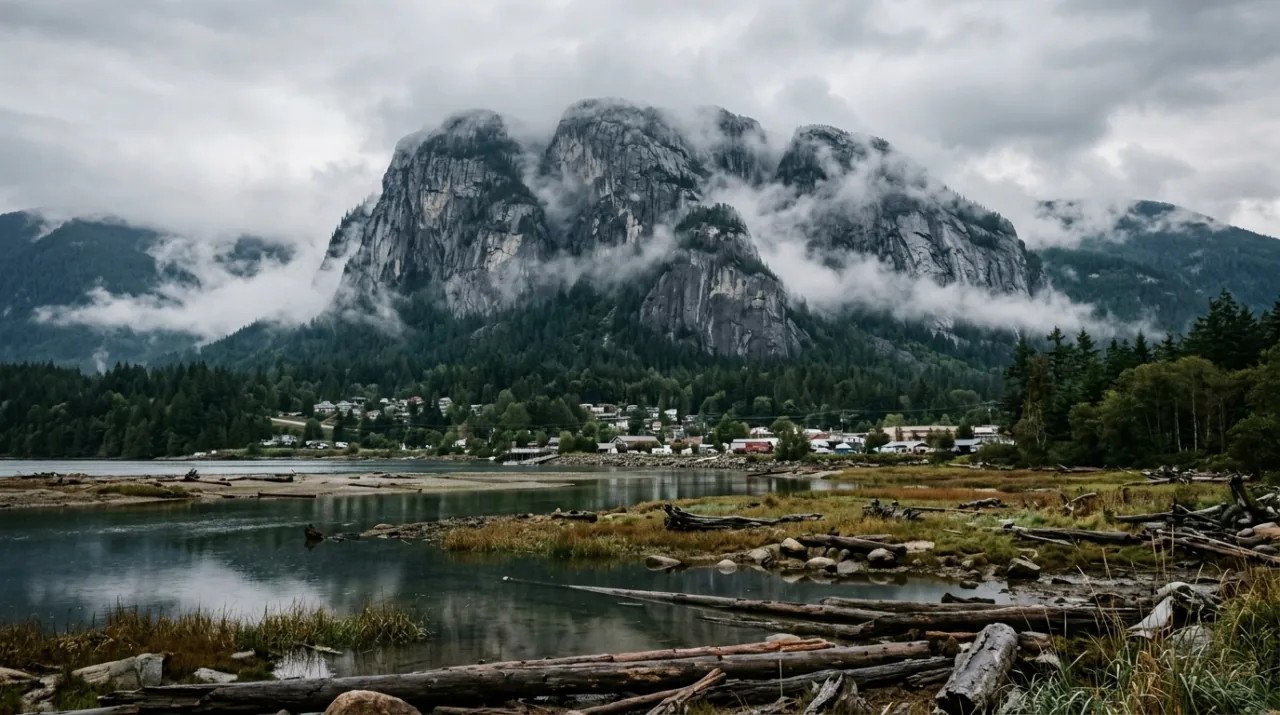
Ioco sits at the base, on the inlet, next to the former Imperial Oil refinery lands. It is the oldest part of this area by seventy years.
Heritage Mountain occupies the lower and middle slopes, closer to the town centre and the first of the hillside subdivisions to be built out.
Heritage Woods sits higher up, with more tree cover around it and generally later construction.
Twin Creeks runs alongside them on the same hillside.
Above and around the city boundary are the Village of Anmore and the Village of Belcarra, along with Buntzen Lake, Sasamat Lake and Belcarra Regional Park. That matters for your weekends and for your traffic, because the road up the hill carries visitors heading to those places as well as residents.
The Port Moody buyer's guide covers the flat part of the city, Newport Village, Suter Brook and the Evergreen Line stations. This post is about everything uphill from there.
What you get up the mountain
The subdivisions climbing this hillside date mostly from the 1990s onward, with later phases pushing progressively higher. That produces a specific kind of stock.
Larger detached houses. Lot sizes and floor areas here run bigger than what the same money buys in the older, flatter neighbourhoods near the water. Three levels with a walk-out lower floor is a common shape on a sloped lot.
Newer construction. A house built in 2004 has different plumbing, wiring, insulation and window technology than a house built in 1964. That shows up in maintenance, in insurance, and in what an inspector finds.
Townhome stratas. Alongside the detached streets there are townhome complexes, which is how a buyer gets into this area without buying a full house. These are the units worth reading carefully, for reasons covered further down.
Views. Parts of the hillside look out over Burrard Inlet. A view is one of the few features that survives a market cycle, and it is also one of the easiest things to lose to a neighbour's tree or a future build, so confirm what protects it before you pay for it.
Trees and quiet. The forest is right there. Streets are curved and residential with little through traffic.
Ioco, the company town at the bottom
Ioco is the reason this corner of Port Moody has a name that looks like a typo. It is a short form of Imperial Oil Company.
Imperial Oil picked the Burrard Inlet north shore location for a refinery by 1914. To house the workers, the company hired the architects Blackadder and MacKay and the Dominion Construction Company to build forty houses across from the refinery in 1921. The town filled out from there with a community hall, two grocery stores, a restaurant, a meat market, churches and a school, because the site was cut off from the rest of the region and had to supply its own daily life.
Much of that early town is still standing.
The City of Port Moody treats Ioco Townsite as one of its two heritage conservation areas, alongside Moody Centre. For an owner, that is a set of rules, not a plaque. A heritage alteration permit is required before altering a building, structure, land or feature, adding a structure, building something new, or subdividing the property. The City publishes development guidelines for the area that set out what fits.
If you are considering a property inside the conservation area, read those guidelines before you write an offer, and treat the permit process as part of the cost and timeline of any renovation you have in mind.
The former industrial lands around the townsite have been through years of planning discussion about how much housing they can hold and how traffic would reach them. Proposals have come and gone. Check the City of Port Moody's current development applications rather than acting on a headline from an earlier year, because what is live today is the only version that affects your purchase.
The commute, told honestly
There is no SkyTrain station on this hillside.
Port Moody's two stations, Moody Centre and Inlet Centre, both sit in the town centre on the Millennium Line Evergreen Extension, which opened on December 2, 2016. Moody Centre also has a West Coast Express platform.
From Heritage Woods, Heritage Mountain or Twin Creeks, reaching either station means going down the hill first, by car or by bus, then boarding the train. That first leg is part of your commute every single day, in both directions, and it is the piece listings tend to leave out.
Three practical consequences.
Parking at the station becomes part of the plan. If you drive down and park, find out where and what it costs before you commit to the routine.
Bus timing shapes your morning. Check the actual schedule for the specific stop nearest the address, at the hour you would travel, rather than trusting a map's walking circle.
Two cars is the common pattern. Households here usually own more vehicles than households in the town centre. Budget for the second car, its insurance and its fuel, because it is a housing cost in everything but name.
Buyers who want the train within walking distance are describing a different part of the city. If transit access is the top priority, look at the flat, or read Coquitlam's transit-oriented areas for how station proximity is being formalised across the Tri-Cities.
The slope is a feature and a cost
Steep ground changes three things about ownership.
Winter. Elevation means the hillside can hold snow while the town centre is wet. Steep streets and steep driveways make that a bigger event than it would be on flat ground. Winter tires stop being optional.
Walkability. A distance that reads as short on a map is a different experience uphill carrying groceries. Walk the route from the address to the nearest shop and back before you decide the area is walkable.
Water and soil. Everything on a slope has to deal with water moving downhill. Drainage, retaining walls and soil stability are the engineering behind these neighbourhoods, and they are the items that generate expensive repairs.
Reading a hillside strata
If you are buying a townhome here, the slope belongs in your document review.
Ask for geotechnical reports. Ask the strata corporation whether it holds engineering reports on slope stability or retaining structures, and read what they say. A geotechnical report is an engineer's assessment of whether the ground is stable enough for what is built on it.
Look at the retaining walls. Walk the complex and look at them. Bulging, cracking, leaning or water seeping through the face are all reasons to ask a direct question in writing.
Follow the drainage. Find out where water goes when it rains hard. Blocked or undersized drainage on a slope produces both water damage and pressure behind walls.
Read the depreciation report. It lists major components, their expected remaining life and the cost to renew them. On a hillside property, check specifically whether retaining walls and drainage appear in it, and what the plan says about funding them. Our guide to reading a strata depreciation report walks through how to do this.
Check the contingency reserve fund against that list. A fund that cannot cover the next scheduled item means a special levy is coming, and owners split it by unit entitlement.
Schools, trails and weekends
The hillside falls under School District No. 43 (Coquitlam), which operates elementary, middle and secondary schools serving this area, including Heritage Woods Secondary. Catchment boundaries belong to the district and have been redrawn before when new schools opened, so confirm the catchment for the exact address with School District 43 rather than relying on a listing description or a neighbourhood blog. A boundary can run down the middle of a street.
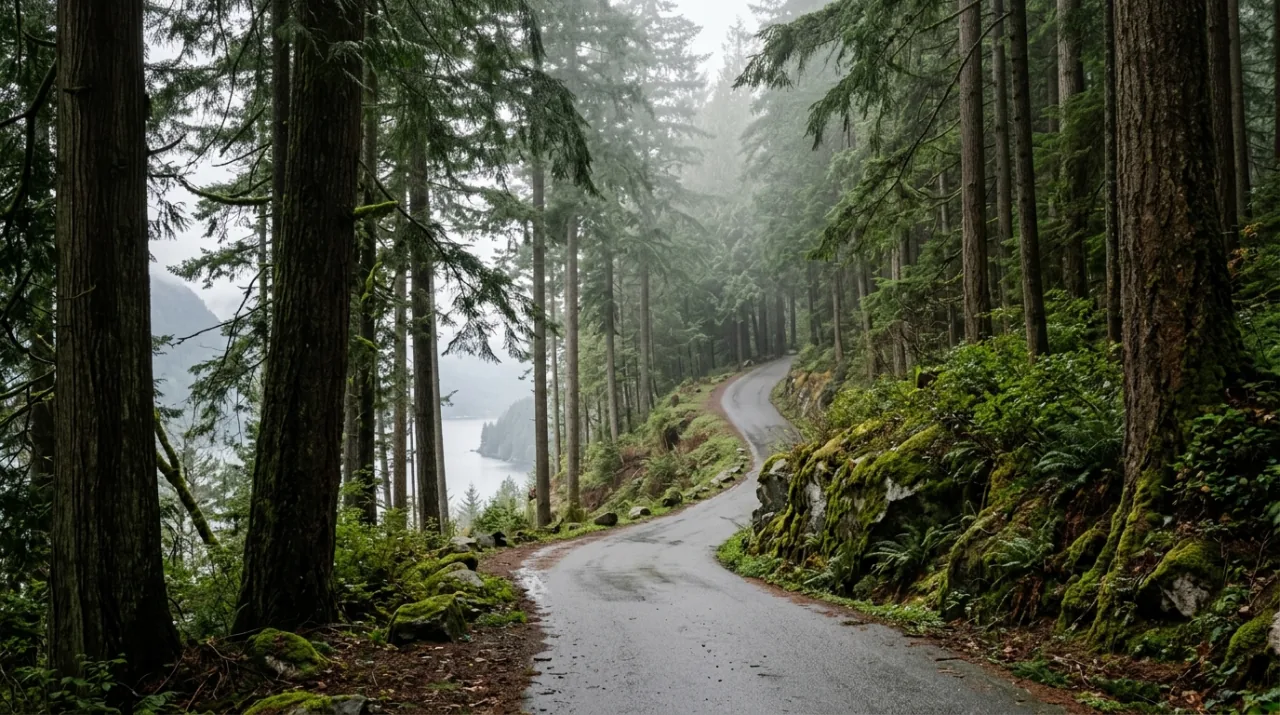
The outdoor access is the part residents talk about most. Buntzen Lake, Sasamat Lake and Belcarra Regional Park are close, and the Diez Vistas trail, which climbs the ridge above Buntzen Lake to a series of viewpoints, starts within a short drive. Trail networks connect into the hillside itself, so a walk in the forest can begin from the street.
The same access brings weekend traffic. On hot summer days the roads toward the lakes carry visitors from across the region, and parking at the lakes fills. Some of those trips pass through the routes you use.
Buying in Heritage Woods, Heritage Mountain and Ioco: the key points
- The hillside covers Heritage Mountain, Heritage Woods and Twin Creeks, with the historic Ioco townsite at the base near the old refinery lands.
- Most of the housing was built from the 1990s onward: larger detached homes and townhome stratas, newer than the stock down on the flat.
- Ioco is a heritage conservation area, so a heritage alteration permit is required to alter, add to, build on, or subdivide a property there.
- No SkyTrain station sits on the hillside. Every transit trip starts with a drive or a bus down to Moody Centre or Inlet Centre.
- On a slope, drainage, retaining walls and geotechnical reports are the strata items that matter most.
- Buntzen Lake, Sasamat Lake, Belcarra Regional Park and the Diez Vistas trail are the weekend payoff, and they bring visitor traffic with them.
- Confirm school catchments with School District 43 for the exact address.
- Contact our team to compare specific streets on the hillside, or browse listings to see what is active now.
Plan your next step
Use neighbourhood checks to test the real drive or bus trip down to the station at the hour you would actually travel, and the strata review chapter to work through drainage, retaining walls and reserve funding before you remove your subjects on a hillside townhome.
Frequently asked questions
Where exactly is the Port Moody hillside?
It is the ground rising north east of the Port Moody town centre, climbing away from the south shore of Burrard Inlet. The residential areas on it are Heritage Mountain lower down, Heritage Woods higher up, and Twin Creeks alongside them, with the historic Ioco townsite at the base near the former refinery lands. Anmore and Belcarra sit beyond the city boundary further up and around.
Is there a SkyTrain station in Heritage Woods or Heritage Mountain?
No. Port Moody's two stations, Moody Centre and Inlet Centre, are both on the Millennium Line Evergreen Extension down in the town centre. From the hillside you drive or take a bus down to one of them and continue by train from there. Plan for that first leg on every trip, because it is part of your commute whether or not the listing mentions it.
How old are the homes on the hillside?
Most of the detached and townhome subdivisions were built from the 1990s onward, working progressively further up the mountain, which makes this some of the newest housing stock in Port Moody. Homes higher up the hill are generally the later phases. Ioco at the bottom is the opposite case, with houses dating from the early 1920s.
What is the Ioco townsite?
Ioco is a planned company town that Imperial Oil built for workers at its Burrard Inlet refinery, starting with forty houses in 1921 designed by the architects Blackadder and MacKay. The name is a short form of Imperial Oil Company. The town had its own community hall, grocery stores, a restaurant, churches and a school, because it was isolated from the rest of the region at the time.
Can you buy a house in Ioco?
Properties there do change hands, but the whole townsite is one of Port Moody's two heritage conservation areas, so ownership comes with rules. Owners need a heritage alteration permit from the City before altering a building, adding a structure, building new, or subdividing. Read the City's Ioco Townsite guidelines before you make an offer, because they shape what you can change.
What is happening with the Ioco lands redevelopment?
The former industrial lands around the townsite have been in a long planning process, and Port Moody has moved through official community plan work that sets how much housing the area can hold. Any proposal there also has to deal with the heritage conservation area and with road access up the hill. Check the City of Port Moody development applications page for the current status rather than relying on older news coverage.
What schools serve the hillside?
The hillside falls under School District No. 43 (Coquitlam), which runs elementary, middle and secondary schools on and around the mountain, including Heritage Woods Secondary. Catchment boundaries are set by the district and have been redrawn before as new schools opened. Confirm the current catchment for a specific address with School District 43 directly, because the boundary can split a street.
Is the hillside hard to live on in winter?
The streets are steep and the elevation means the hillside can hold snow when the Port Moody town centre is clear. Winter tires are worth having, and a steep driveway changes what a snowfall means for your morning. Ask a neighbour or the strata council what a normal January looks like on that particular street.
What should I check in a hillside townhome strata?
Look at drainage, retaining walls and any slope stability work, because those are the items that cost real money on a slope. Read the depreciation report to see when those components are due for renewal and whether the contingency reserve fund can cover it. Ask the strata directly for any geotechnical engineering reports the corporation holds.
Who does the hillside suit as a buyer?
It suits households who want a larger, newer home with outdoor space and trail access, and who already expect to drive. If your priority is walking to a SkyTrain platform, groceries and restaurants, the flat part of Port Moody around Moody Centre and Newport Village is the better match. Many buyers look at both before deciding which trade-off they prefer.