

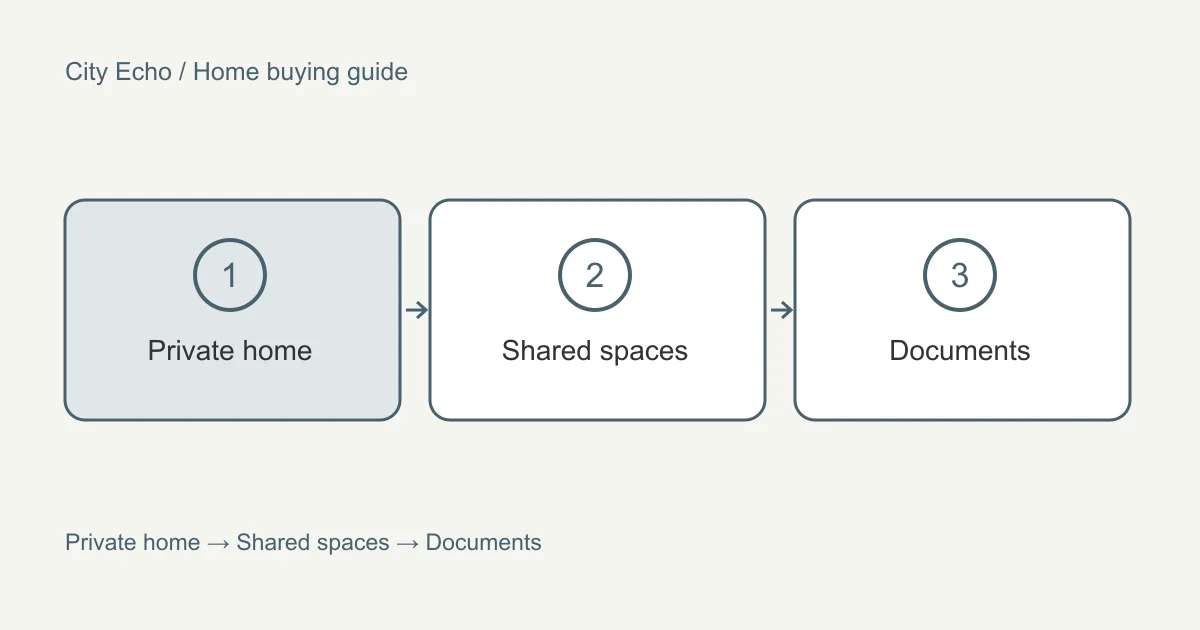
Reviewing a strata home means looking at the private space and the shared obligations together. The interior may meet your requirements while a parking arrangement, intended alteration, or unanswered maintenance question still needs attention. Keep both parts of the decision in view instead of finishing the document review only after you have emotionally committed to the layout.
This chapter gives you a method for organising the questions. It is part of the home-buying guide, with search preparation helping you define intended use and comparing homes helping you keep evidence separate from preferences. Use qualified advice for the interpretation that a checklist cannot provide.
Identify the property and the intended use
Start by confirming what the proposed purchase includes. Ask your professional to identify the strata lot, any relevant section, and the records needed to understand the property. Do not infer the ownership arrangement from the building's appearance. A ground-oriented home and an apartment may both involve shared property questions, while similar-looking homes can have different arrangements that matter to your plans.
Write down how you intend to use the home and any space associated with it. Include parking, storage, pets, work from home, visitors, and alterations if they matter to you. The aim is to identify questions early, not to assume restrictions or permissions. Ask which documents address each intended use, and record the answer with a source rather than leaving a general assurance beside the requirement.
The province's buying and selling strata information is a useful starting point for the records and ownership topics. Use it to prepare questions about the actual property. The practical question is whether the arrangement works for your household after the relevant obligations have been understood, rather than whether strata living is universally better or worse.
Build a document index before drawing conclusions
Create an index of the records received, including each document's date and the period it covers. Mark missing attachments and unreadable pages. Keep revised versions instead of overwriting them without a note. This helps you understand whether an answer reflects the current material or an earlier state of the property. A folder containing many files can still omit the document relevant to your main concern.
BC's Form B information describes the certificate and information it discloses. Ask for a current certificate and check the attachments with your professional. Link your questions to the relevant entry or page, rather than assuming that having the form means its implications have been considered.
Use an unresolved list beside the index. For each issue, write the question, the person asked, and the response still needed. A missing answer should remain visible even when other parts of the review look satisfactory. If the question affects whether the home meets an essential need, discuss its importance and timing with your professional before allowing the rest of the checklist to obscure it.
Examine recurring costs in context
Record the monthly fee with its date and source. Then ask what it covers and what other costs may apply to your household. Keep the operating budget, reserve information, and any relevant levy questions connected to the records you are reviewing. A comparison based only on the fee can hide differences in included services, responsibilities, and unresolved work.
Do not create a forecast by adding numbers you do not understand. If a report or budget includes a figure, ask what period, assumption, or decision it represents. A projected expense is different from an approved amount, and a quoted cost may cover a different scope from another figure in the folder. Preserve those distinctions when preparing questions about the home's financial obligations.
The depreciation report article introduces how planning documents fit into a buyer's review. Treat any examples in an article as explanations, not amounts to substitute for this property's records. Bring the actual documents and your questions to the relevant professional. Your comparison becomes more useful when every figure has an identifiable meaning, even if some entries remain unresolved.
Read maintenance information as a sequence
A maintenance issue may appear in several records over time. Start with the earliest relevant note you have, then follow the references to inspections, proposals, decisions, and completed work. Record gaps rather than assuming that a later silence means the matter was resolved. Ask what evidence is available for completion when a past project affects your assessment of the building.
The province's depreciation report requirements describe the planning role and required content of these reports. When reading a report, identify the components and assumptions relevant to the questions you are asking. Distinguish the report's planning information from a condition conclusion about the particular interior you viewed.
Ask who should interpret a technical concern. A real estate professional can help organise questions and records, while a technical assessment may require an appropriately qualified specialist. Avoid diagnosing a building from an isolated photograph or sentence in minutes. Your role in the review is to notice the issue, preserve the source, and make sure the question reaches someone who can address it within an understood scope.
Connect shared spaces to the records
Walk the routes relevant to your daily use when access is permitted. Consider the entrance, lift, stairs, parking, bicycle storage, waste area, and any other space you expect to use. Make a practical note of what works and what does not. If an area cannot be visited, keep it on the unresolved list rather than recording a favourable impression from a photograph alone.
For a space assigned to the home, ask how the allocation is recorded and what rights or conditions apply. The province distinguishes different parking and storage arrangements. A physical space and the legal arrangement governing it are connected questions, but seeing one does not establish the other. This is particularly important when a space is essential to the purchase.
Keep access and permission separate as well. An amenity may exist, but its rules or practical use may not suit your needs. Ask for the applicable information rather than inferring unrestricted use from its presence. Bring the observations into your neighbourhood checks, where the route outside the building should connect with the route you actually use inside it.
Put insurance questions with the right professional
Obtain the available insurance information and identify any questions raised by your intended purchase. Ask an insurance professional what they need to assess your own coverage requirements. Provide the actual records they request rather than relying on a verbal summary from another buyer or a generic article. Keep their response with the assumptions and date that support it.
The province's strata insurance information explains why insurance is a separate part of strata ownership. Do not assume that the corporation's policy answers every question about your own belongings, improvements, or exposure. The appropriate coverage discussion depends on the property, the available policy information, and your circumstances.
If an answer is conditional on information you have not obtained, leave the question open. A possible quote is not the same as an understood arrangement for the home you intend to buy. Ask your professional how an unresolved insurance issue affects the decision stage you are approaching. The important result is clarity about what has been established, not a checkbox labelled insurance with no explanation behind it.
When requesting clarification, quote the document title, date, and relevant page in your question. Describe the practical consequence you are concerned about rather than asking for a general reassurance. A focused question helps the recipient identify the record or specialist input needed, and makes the resulting answer easier to connect to your decision. Keep any qualifications attached to that answer in the final notes.
Finish with a decision record
Summarise the review using questions resolved, obligations understood, and matters still open. For each resolved question, retain the supporting record or professional response. For each open question, state why it matters and what would be needed to answer it. This gives the next discussion a clear focus and avoids rereading the entire document folder without knowing what you are trying to establish.
Compare the resulting picture with your search brief. A rule may be acceptable for one household and incompatible with another household's essential plan. A maintenance question may call for further investigation rather than an immediate positive or negative verdict. Keep the decision tied to your needs and the evidence, while avoiding broad claims about the building that go beyond what the review supports.
Use the home comparison tool only for preferences you can sensibly rate. Leave legal, technical, and financial questions in the evidence record rather than allowing them to disappear into a weighted average. Return to the main guide to coordinate the document review with the other steps and the actual deadlines your professional has explained.