
Buried Oil Tanks on Metro Vancouver Lots: The Search, the Cost, and Who Pays
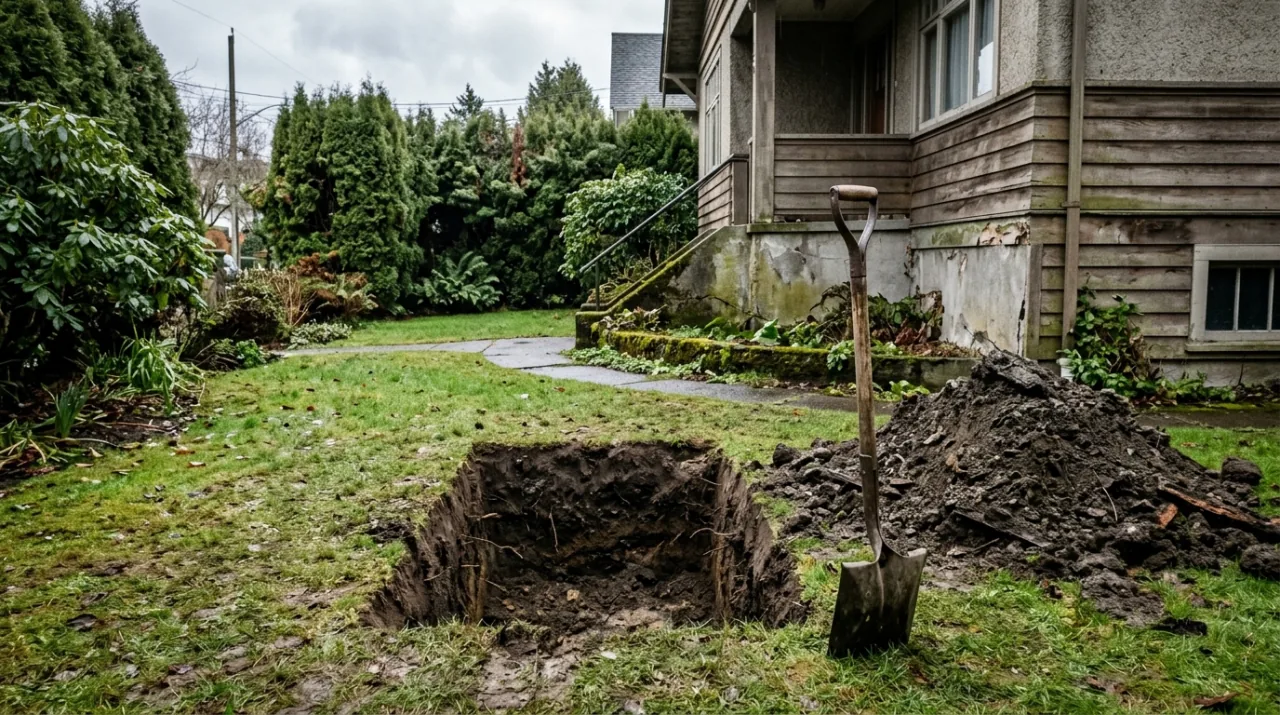
Most detached houses in Vancouver, Burnaby, New Westminster and North Vancouver that were built before the 1960s were heated with oil. The fuel sat in a steel tank buried in the yard, and a truck came by to fill it.
When natural gas service reached those streets, homeowners swapped the furnace. The tank in the yard was often left exactly where it was.
Why this is a buyer's problem
Steel corrodes. A tank that has been underground for sixty years can leak, and the oil moves into the soil around it.
Under BC's Environmental Management Act, several parties can be held responsible for cleaning up a contaminated site: a current owner, a previous owner, and whoever produced or transported the substance. The Ministry of Environment puts it directly in its guidance for homeowners: if you buy a home with a heating oil tank, knowingly or not, you become potentially liable for future cleanup costs.
The seller who lived there for thirty years is not the automatic answer. Neither is the owner who installed the tank in 1958. The person who owns the lot when the problem surfaces is the person the bill reaches first.
That is why this is a due diligence item and belongs in your subject period.
A home inspection will not find it
A home inspector looks at what is visible and reachable. A tank two feet under the front lawn is neither. Our BC home inspection checklist covers what an inspector does check, and an underground tank sits outside that scope.
What a good inspector will do is flag the clues on the surface.
The fill pipe. A capped pipe at ground level, usually near the front or side of the house, where the delivery truck connected.
The vent pipe. A smaller pipe running up the outside wall, often painted the same colour as the siding and easy to miss.
Feed lines in the basement. Copper tubing entering the foundation wall near where an old furnace stood.
Patches and settling. Grass that grows differently over one area, or a section of lawn that has settled.
None of these are proof, and their absence is not proof either. Pipes get cut off and paved over.
How a tank scan works
A technician walks the yard with one of two tools.
A magnetometer detects buried metal by reading changes in the magnetic field. It is the standard tool for finding a steel tank.
Ground-penetrating radar sends a signal into the soil and reads what bounces back. It is used where metal readings are confused by other buried objects, or where the ground has been disturbed.
On a standard city lot the visit takes about an hour. The technician marks any suspected location and gives you a written report you can hand to your lawyer, your insurer and your lender.
Where tanks usually sit: the front or side yard, close enough to the street for the delivery truck and close enough to the house for the feed line. They also turn up under decks, patios, driveways and additions built years after the tank stopped being used.
When to order one
Any detached home built before roughly 1970 in the older parts of Vancouver, Burnaby, New Westminster and North Vancouver is worth scanning.
The current heating system tells you nothing. A house with a 2019 gas furnace may still have the 1954 tank sitting under the hydrangeas.
Order the scan at the same time as the home inspection so both reports land inside your subject period. The scan is the cheapest item on your due diligence list and the only one that checks for a problem measured in tens of thousands of dollars.
What happens when one is found
The work runs through a qualified contractor and, in most Metro Vancouver municipalities, a permit from the fire department.
Burnaby's tank removal permit is issued by the Burnaby Fire Department under the National Fire Code of Canada 2020, and it requires the removal company to hold a valid Burnaby business licence and to send verification back to the fire department once the work is done. Vancouver, North Vancouver and New Westminster run their own versions of the same process, so confirm the requirements with the municipality the property sits in.
The sequence is:
- Permit. The contractor applies before digging.
- Empty and remove. Remaining oil is pumped out, the tank is dug up, and both go to an approved disposal facility.
- Soil samples. A qualified professional collects samples and sends them to a laboratory.
- Remediation, if needed. Contaminated soil is dug out, hauled to an authorised facility and replaced with clean fill, with further samples taken to confirm the site meets provincial standards.
- Report. You end up with documentation showing the tank is gone and the soil is clean.
The cost, in plain terms
Three separate numbers, and they are nothing alike in size.
The scan is the small one. It is a technician and an hour.
A clean removal is the middle one. Excavation, disposal, the permit, the lab work. It is real money and it is predictable money.
Remediation of contaminated soil is the number that can run into large sums and has no ceiling you can name in advance. It depends on how far the oil travelled, how deep it went, whether it reached groundwater, and whether it crossed onto the neighbour's lot. If contamination has migrated to a neighbouring property, the responsible person must notify that owner within 15 days.
Anyone quoting you a firm figure before the tank is out of the ground is guessing. Get written quotes from two or three tank removal companies once you know what is there.
How to handle it in your offer
Make the scan part of your inspection subject. Write the subject so it covers an underground storage tank search as well as a building inspection. That gives you the contractual room to walk if the scan comes back positive and the seller will not deal.
If a tank is found, ask for removal and a clean soil report as a condition of completion. This is the part buyers get wrong. A price credit sounds simpler, and it puts a fixed number on an open-ended cost. You agree to $15,000 off, complete the purchase, and then the soil test comes back dirty and the whole remediation is yours.
Removal before completion keeps the liability with the seller through the part nobody can price. The BC Ministry of Environment lists exactly this approach in its guidance for prospective purchasers: include the tank removal and remediation as a condition of sale.
This is also one of the specific risks you take on when you write without subjects. Our piece on what subject-free actually means covers the rest.
The insurance angle
Many insurers will not write a policy on a home with a known buried oil tank. Others will write it only once removal is documented.
Your lender will not advance funds without proof of insurance in place before completion, so an insurance refusal can stop a purchase outright. Start the conversation with your broker during the subject period rather than in the final week, as our post on home insurance before completion sets out.
"Decommissioned in place" and why paper matters
Some tanks were emptied, cleaned and filled with sand rather than dug out. The BC Fire Code requires that removal, abandonment in place, or taking a tank out of service be done in conformance with good engineering practice.
A tank left in the ground is acceptable in some situations, usually where the tank sits under a permanent structure and digging it out would threaten the building.
The question to ask is always about documentation. A seller saying a tank was decommissioned in place, with no permit, no contractor report and no soil test, has told you a story. Insurers, lenders and your own future buyer will all treat that tank as an unknown. Ask for:
- the municipal permit for the work
- the contractor's completion report
- laboratory soil test results
If none of it exists, you are buying a tank in the ground with no evidence about the soil around it.
What this comes down to
- Homes built before the 1960s in these cities were commonly heated with oil, and many tanks were left in the ground.
- A home inspection does not check underground. A tank scan is a separate service, and it takes about an hour.
- Fill pipes and vent pipes are the surface clues, and their absence proves nothing.
- The current owner is among the parties that can be held responsible for cleanup, which makes this a buyer's risk after completion.
- Removal runs under a fire department permit, with laboratory soil testing to confirm the site is clean.
- The scan is small money, a clean removal is moderate, and contaminated soil is the open-ended number. Get written quotes.
- Negotiate removal and a clean soil report before completion, rather than a price credit.
- Many insurers refuse a home with a known buried tank, and no insurance means no mortgage advance.
- Contact our team before you write on an older detached home, or browse listings.
Plan your next step
Work through house viewing so you know what to look at on the outside walls and in the basement of an older home, and use search preparation to line up your inspection and scan bookings before you are in competition on a property.
Frequently asked questions
Why are there buried oil tanks under Metro Vancouver yards?
Oil was a normal way to heat a house here before natural gas service reached most residential streets, and the fuel was stored in a steel tank buried in the yard. When homeowners switched to gas, the furnace was replaced but the tank often stayed in the ground. The BC Ministry of Environment notes that residential heating oil tanks have been installed in Canada for over 60 years and that many are now abandoned or unused.
Does a home inspection find a buried oil tank?
No. A home inspector examines what is visible and accessible, and a tank under the lawn is neither. A good inspector may point out a fill pipe or a vent pipe on the wall as a reason to look further. Finding the tank itself takes a separate scan by a company that does this work.
How does an oil tank scan work?
A technician walks the yard with a magnetometer, which is a device that detects buried metal, or with ground-penetrating radar, which sends a signal into the soil and reads what bounces back. On a standard city lot the visit usually takes about an hour. The technician marks any suspected tank location and gives you a written result.
Which homes should get a tank scan?
Any detached home built before roughly 1970 in Vancouver, Burnaby, New Westminster or North Vancouver is worth scanning, and older neighbourhoods in those cities are where oil heat was most common. The age of the house matters more than the current heating system, because a gas furnace today says nothing about what heated the house in 1955. A scan is inexpensive compared with the inspection itself.
What are the surface clues that a tank is present?
A fill pipe and a vent pipe are the two to look for. The fill pipe is a capped pipe at ground level, often near the front or side of the house, where the delivery truck connected. The vent pipe is a smaller pipe running up the exterior wall. Copper feed lines entering the basement wall near where a furnace used to sit are another sign.
Where are buried tanks usually located?
Most sit in the front or side yard, close to the street so the delivery truck could reach the fill pipe, and close enough to the house to run a feed line to the furnace. Tanks also turn up under decks, patios, driveways and additions that were built after the tank was abandoned. A tank under a permanent structure is harder to remove and is the situation where a fire authority may consider leaving it in place.
Who pays to clean up contaminated soil?
Under the Environmental Management Act, a current owner, a previous owner, and the party that caused the contamination can all be named as responsible for cleanup. In practice the current owner is the easiest party to reach, which is why a buyer who completes on a house with an unfound tank inherits the problem. The BC Ministry of Environment states plainly that if you buy a home with a heating oil tank, knowingly or not, you become potentially liable for future cleanup costs.
What does removal actually involve?
A qualified contractor pumps out any remaining oil, digs up the tank, and takes it and the oil to an approved disposal facility. Soil samples are collected and sent to a laboratory. If the results show contamination, the affected soil is dug out and replaced with clean fill, and more samples are taken to confirm the site meets provincial standards. Municipalities normally require a permit from the fire department for this work.
What does 'decommissioned in place' mean?
It means the tank was emptied, cleaned and filled with an inert material such as sand, then left in the ground rather than dug out. The BC Fire Code requires that removal, abandonment in place or taking a tank out of service follow good engineering practice. If a seller tells you a tank was handled this way, ask for the permit, the contractor's report and the soil test results, because a tank left in the ground without documentation is treated by insurers and lenders as an unknown.
Will insurance cover a home with a buried oil tank?
Many insurers decline to write a policy on a home with a known buried tank, and others will insure it only after removal is documented. That matters for your purchase because a lender will not advance mortgage funds without proof of insurance in place before completion. Sort the tank question out during your subject period, not in the final week.
Sources
- BC Ministry of Environment, Facts on Contaminated Sites 32: Residential Heating Oil Storage Tanks (accessed September 12, 2026)
- British Columbia Fire Code 2018, Division B, Section 4.3 Tank Storage (accessed September 12, 2026)
- Province of British Columbia, Site Remediation (accessed September 12, 2026)