
New Westminster Buyer's Guide: Five SkyTrain Stations and Six Different Cities
New Westminster fits five SkyTrain stations inside 15.62 square kilometres. Sapperton, Braid, Columbia, New Westminster, and 22nd Street, all on the Expo Line.
Buyers see that and treat the city as one market. It is six or seven small markets that happen to share a city hall, and the differences between them are larger than the differences between most Burnaby neighbourhoods.
The neighbourhoods, and what each one sells
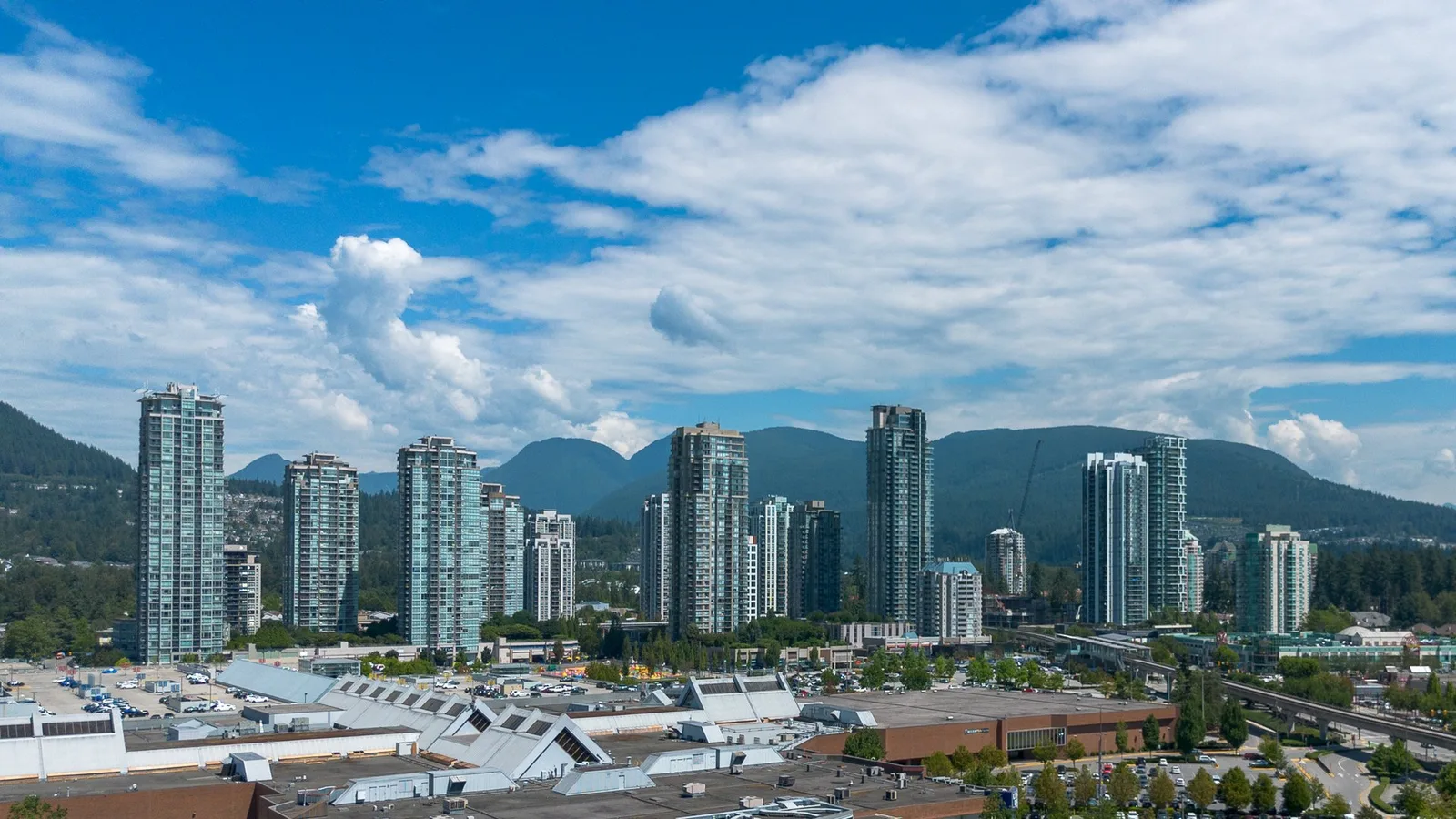
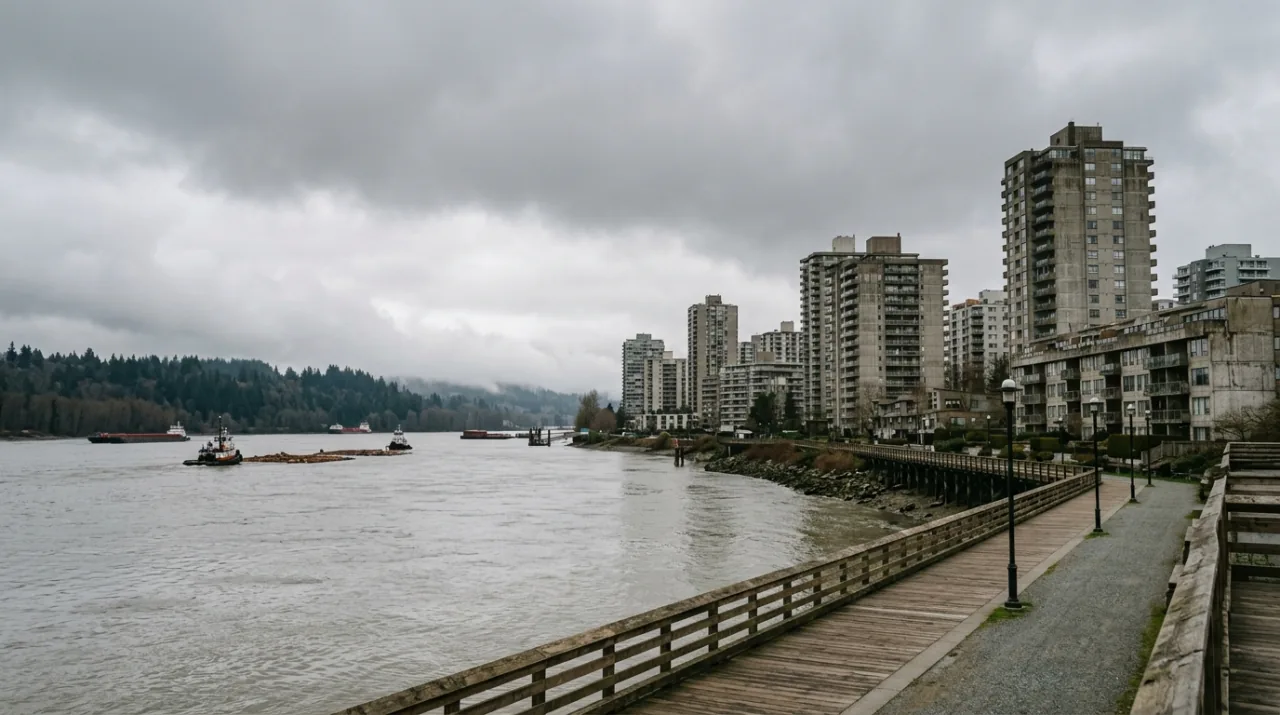
Downtown and the Quay. The lowest and flattest part of the city, on the Fraser River. This is concrete tower territory, with the River Market, the waterfront boardwalk, and Columbia Station underground beneath Columbia Street. Buyers get a walkable riverfront and the shortest trip downtown. Many of the towers here went up in the 1980s and 1990s, so you are buying older concrete.
Uptown. The commercial centre on top of the hill, around 6th Street and 6th Avenue, near Moody Park. Groceries, banks, restaurants, and a large share of the city's mid-rise and high-rise rental and strata stock. New Westminster Station is the nearest one. Uptown suits buyers who want daily errands on foot and do not need to be on the water.
Sapperton. East end of the city, built around Royal Columbian Hospital and East Columbia Street. Sapperton Station serves it. A mix of older houses, newer townhomes, and condo development along the Brunette corridor.
Queens Park. The heritage neighbourhood, wrapped around the park of the same name. Large lots, mature trees, and the city's best-preserved pre-war houses. Prices here run well above the city average, and the rules are different, which is covered below.
West End. Between Uptown and 22nd Street Station, on the western edge. Smaller detached houses on smaller lots, quieter streets, and a lower entry price than Queens Park for a house.
Connaught Heights. The city's southwest corner, where 22nd Street Station sits. Detached houses, and an area that has drawn attention for future density because of the station. Buyers looking at land value rather than at the house itself often start here.
What five stations actually buys you
All five sit on the Expo Line, which runs to downtown Vancouver on one branch and to Surrey and Langley on the other.
Columbia Station is the junction point where the two Expo Line branches split, which matters for frequency. New Westminster Station sits above a shopping centre at 8th Street. Sapperton and Braid serve the east end, and Braid connects to the industrial and Brunette Creek area. 22nd Street sits at the west end in Connaught Heights.
The practical effect is that a large share of New Westminster homes are inside a 15-minute walk of rapid transit. In a region where transit access is priced into almost everything, that is the city's main structural advantage. The same logic drives values around stations elsewhere, which we cover in Coquitlam's transit-oriented areas.
The older concrete condo stock, and what it means for your budget
This is the part that decides most purchases here.
New Westminster built concrete apartment towers earlier than Brentwood and Metrotown did. Around the Quay and through Uptown, a large share of the concrete inventory dates from the 1980s and 1990s.
Older concrete has real advantages. Units are often larger than what is built today for the same bedroom count. Concrete carries sound between units better than wood frame. And the price per square foot is lower than newer Burnaby towers, which is why buyers priced out of Brentwood and Metrotown end up looking here.
The costs show up in two places.
Strata fees. An older building has more to maintain and more systems reaching the end of their service life. Elevators, boilers, roofing membranes, windows, plumbing risers, and parkade membranes all have replacement horizons. A fee that looks high next to a new building is sometimes a strata that is funding its future properly. A fee that looks low on a 40-year-old tower is the one to ask questions about. Our piece on what strata fees actually cover goes through the line items.
The depreciation report. This is a projection of what the building will need to spend on repairs and replacements over 30 years, set against what the contingency reserve fund holds.
The rules tightened. Since July 1, 2024, a strata can no longer vote to defer the report, and strata corporations with five or more lots in Metro Vancouver had to have one by July 1, 2026, renewed every five years after that. So for a New Westminster building of any size, the report should exist.
Read the gap between projected costs and the fund balance. That gap is paid by owners, either through fee increases spread over years or through a special levy in one bill. Our guide to reading a strata depreciation report covers how to find the numbers that matter inside a long document.
Queens Park and the Heritage Conservation Area
New Westminster council adopted a Heritage Conservation Area over the Queen's Park neighbourhood in 2017. It is the only one in the city.
What it does is place a layer of heritage protection across properties in the area, whatever their construction date. Properties are sorted into protected and non-protected, and the classification decides what needs a Heritage Alteration Permit from the city before the work can start.
Work that can require a permit includes building a new house, demolishing one, adding a laneway or carriage house, and changes affecting the front, the sides, or the visible roofline of a protected property.
For a buyer, this cuts two ways. The rules preserve the streetscape you are paying for, so the character of the neighbourhood is protected from the house next door being torn down. They also limit what you can do with your own property, and they add a permit step with design review to plans that would be straightforward elsewhere in the city.
Check the city's classification for the exact address before you write an offer. Two houses on the same block can sit in different categories.
Sapperton and the hospital
Royal Columbian Hospital is in Sapperton, and it has been going through a multi-phase redevelopment that takes the site from 446 beds to 675.
A hospital of that size is one of the largest employers in the city. Nurses, physicians, technicians, and support staff who want a short commute create demand for both rentals and owner-occupied homes within walking distance. That demand is steady through market cycles, because hospital staffing does not follow the housing market.
For buyers, the effect on Sapperton is a floor under rental demand and a reason for the townhome and condo development along East Columbia and the Brunette corridor. For investor buyers, it is one of the more predictable rental catchments in the region.
How it prices against Burnaby and Vancouver
New Westminster sits below Burnaby on a per square foot basis for comparable condo product, and below Vancouver by a wider margin.
The mechanisms behind the gap are specific.
Building age. Much of the concrete stock is decades older than what sells in Brentwood or Metrotown, and age carries a discount.
Distance downtown. The Expo Line ride from New Westminster to downtown Vancouver is longer than from Metrotown, and time on transit is priced.
Land economics. Burnaby's town centre plans concentrate new high-density towers in a few nodes, which pushes new-build pricing up in those nodes. New Westminster's development is spread across more areas and more of its inventory is resale rather than presale.
The gap reflects those three mechanisms. New Westminster also sells things Burnaby cannot: a historic downtown with its own street grid, a river frontage you can walk from end to end, and five stations inside 15.62 square kilometres.
The trade-offs, stated plainly
Older buildings. More of the inventory is 25 to 45 years old. That means more capital work ahead, more weight on the depreciation report and the contingency fund, and more attention needed on the strata minutes. Budget for the possibility of a special levy in any older building, and read what happens with a strata insurance deductible while you are in the documents.
Steep hills. The city climbs hard from the river up to Uptown. A listing that is 700 metres from a station on a map can be a demanding walk uphill with groceries. Walk the route yourself, in the direction you would walk it coming home.
Pattullo construction. The stal̕əw̓asəm (Riverview) Bridge opened all four lanes on February 14, 2026, replacing the 1937 Pattullo Bridge. Demolition of the old bridge started that same month and was expected to run about two years, with associated roadwork on New Westminster streets including Front Street. If you are buying near Downtown, the Quay, or the Front Street corridor, ask what the construction schedule looks like for that block before you commit.
Traffic through the city. New Westminster has long carried regional traffic between Surrey and points north. The new crossing changes the approach routes. Drive the commute you would actually make, at the hour you would actually make it.
Who the city suits
It suits buyers who want frequent rapid transit and a walkable downtown, and who would rather have more square footage in an older concrete building than less in a new one.
It suits health care workers and anyone else whose work is at or near Royal Columbian.
It suits people who want a house in a heritage neighbourhood and accept design rules as the price of keeping the street intact.
It suits first-time condo buyers who are priced out of Burnaby town centres and want to stay on the Expo Line, a similar calculation to the one buyers make in Edmonds in south Burnaby.
It suits new-construction buyers least, because most of the inventory is decades old and the newest towers price closer to Burnaby.
What this comes down to
- Five Expo Line stations: Sapperton, Braid, Columbia, New Westminster, and 22nd Street.
- The neighbourhoods price separately. Queens Park and Sapperton answer different questions.
- Much of the concrete condo stock is older, which lowers the entry price and raises the weight of the strata documents.
- Every Metro Vancouver strata with five or more lots needed a depreciation report by July 1, 2026, and the deferral vote is gone.
- Queen's Park sits inside a Heritage Conservation Area adopted in 2017, so check the property's classification before you plan any work.
- Royal Columbian is growing from 446 to 675 beds, which supports Sapperton demand.
- The trade-offs are building age, steep hills, and bridge demolition work running into 2028.
- Contact our team for current pricing on a specific New Westminster neighbourhood, or browse listings.
Plan your next step
Work through neighbourhood checks before you narrow the city down to one area, because the walk to the station and the grade of the hill are things you have to test on foot. When you reach the document stage on an older building, strata review covers the depreciation report and the minutes that decide whether the fee you see today is the fee you will pay.
Frequently asked questions
How many SkyTrain stations does New Westminster have?
Five, all on the Expo Line: Sapperton, Braid, Columbia, New Westminster, and 22nd Street. That is more stations than any other municipality of its size in Metro Vancouver. Each one sits in a different neighbourhood, so the station nearest a listing tells you a lot about what kind of housing surrounds it.
Why are New Westminster condos cheaper than Burnaby condos?
The main reason is building age. New Westminster built concrete towers earlier than Brentwood and Metrotown did, so a large share of its concrete stock is older. Buyers pay less per square foot for a 1980s or 1990s concrete building than for one completed in the last ten years, and the trade-off shows up in strata fees and upcoming repair work.
What is the Queen's Park Heritage Conservation Area?
It is a layer of heritage protection that New Westminster council adopted in 2017 over the Queen's Park neighbourhood. It applies to properties in the area regardless of when they were built. Properties are classified as protected or non-protected, and that classification decides which changes need a Heritage Alteration Permit from the city.
Can I renovate a house in Queen's Park?
Yes, though some work needs a Heritage Alteration Permit first. Depending on the property's classification, a permit can be required for a new house, a demolition, a laneway or carriage house, and changes affecting the front, sides, or visible roofline. Check the city's map and address table for your specific address before you make renovation plans or write an offer.
Why is Sapperton in demand?
Royal Columbian Hospital sits in Sapperton, and the site is going through a multi-phase redevelopment that raises its bed count from 446 to 675. A hospital that size is a large and steady employer, and staff who want a short commute create constant rental and purchase demand nearby. Sapperton Station puts the area on the Expo Line as well.
Do I need to read the depreciation report before buying a condo here?
Yes, and in New Westminster it matters more than in newer suburbs because the buildings are older. The report projects maintenance and replacement costs over 30 years and states what the contingency reserve fund holds against them. Compare the projected costs to the fund balance, because a shortfall is paid by owners through fee increases or a special levy.
Will every New Westminster strata have a depreciation report?
Strata corporations with five or more lots in Metro Vancouver had to obtain one by July 1, 2026, and must renew it every five years. The three-quarter vote that previously let a strata defer the report indefinitely was removed effective July 1, 2024. If a building cannot produce a current report, treat that as a question to ask rather than a detail to skip.
What happened to the Pattullo Bridge?
The stal̕əw̓asəm (Riverview) Bridge replaced it. One northbound lane opened in December 2025 and all four lanes opened on February 14, 2026. Demolition of the 1937 Pattullo Bridge began in February 2026 and was expected to take about two years, with related roadwork on New Westminster streets including Front Street during that period.
Is New Westminster hilly?
Much of it is. The city rises steeply from the Fraser River at the Quay up through Downtown to Uptown, and several connecting streets climb hard. This affects walking routes, winter driving, and how usable a home really is if mobility is a consideration. Walk the route from a listing to the nearest station before you decide it is convenient.
Who does New Westminster suit?
Buyers who want frequent rapid transit and a real downtown without Burnaby or Vancouver pricing, and who are willing to take on an older building in exchange. It also suits health care workers near Royal Columbian and anyone who values heritage housing. It suits new-construction buyers less well, because much of the condo inventory is decades old.