
West End & Coal Harbour Condo Buyer's Guide: Downtown Waterfront Living
Walk west from Burrard Street along the downtown Vancouver waterfront and you cross, almost without noticing, from one real estate market into a completely different one. The West End and Coal Harbour sit side by side, both a short walk from Stanley Park, both downtown, and priced worlds apart.
The West End: dense, walkable, and built for people first
The West End developed in the late 1800s as a wealthy residential enclave, with a scattering of heritage homes still standing on its tree-lined streets today. Through the 1950s to 70s, waves of high-rise development transformed it into one of the most densely populated neighbourhoods in Western Canada, a shift that provoked enough local pushback that the city eventually downzoned parts of the neighbourhood, keeping much of it at a walkable mid-rise scale even as towers went up along Robson Street and the southern edge. The result, decades later, is a neighbourhood that's still pedestrian-first: groceries, cafes, English Bay beach access, and Davie Village's restaurant strip are all a short walk from most West End addresses.
The neighbourhood also carries an unusually large share of purpose-built rental housing alongside its resale condo stock, both exist side by side throughout the area rather than being segregated into separate blocks, which contributes to the West End's mixed, lived-in feel compared to some of downtown's newer, more transient condo towers.
Coal Harbour: newer, quieter, and priced at a premium
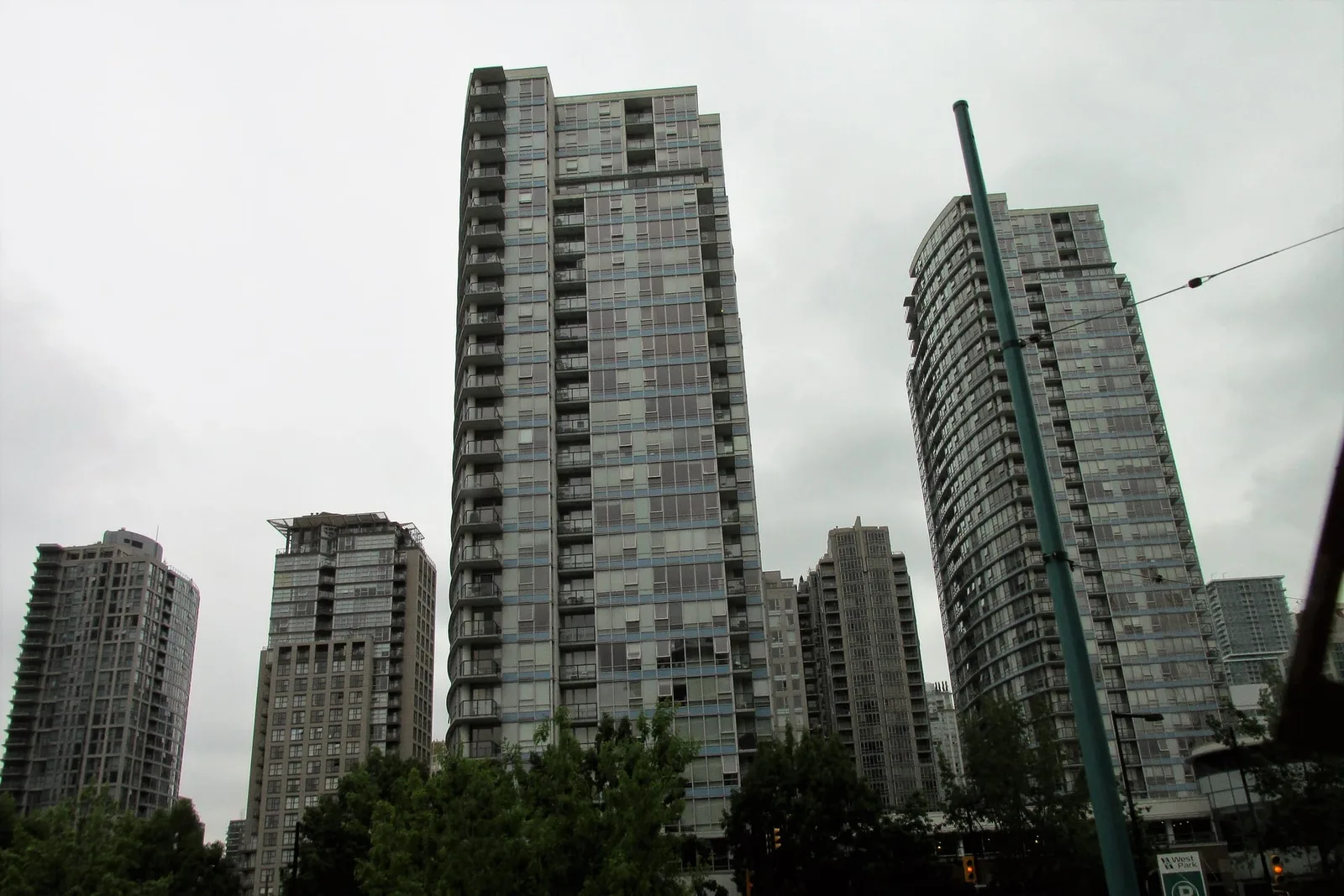
Coal Harbour is the opposite story, a purpose-built marina-front district that emerged largely from the 1990s onward on former industrial and rail land, built specifically around its yacht marina and harbour views rather than growing organically over a century like the West End. It reads as quieter and more polished: wide waterfront promenades, newer high-rise towers, and a retail mix skewed toward higher-end dining and services.
Price tiers, concretely
The gap between the two neighbourhoods shows up clearly in the numbers. Older leasehold and freehold buildings in the West End between Denman and Burrard have been trading at roughly $780 to $920 per square foot, below the broader downtown core average. Coal Harbour sits in a different bracket entirely: the average condo sold price there was $1,453,333 in January 2026, per Hani & Les's market report, with entry-level units starting in the upper six figures and quality two-bedroom suites commonly running from roughly $2 million to $4 million depending on building, floor, and exposure. Even at that upper end, the market has softened somewhat, per Hiatt Luxury Real Estate, Coal Harbour two-bedroom units priced above $2 million were averaging 62 days on market in the most recent reporting, up from 41 days a year earlier, suggesting slower absorption at the top of the market than in the prior year.
For broader context, Metro Vancouver's overall apartment/condo benchmark was $688,000 in July 2026, down 7.5% year-over-year, per WOWA's compiled market data , a regional cooling trend that both neighbourhoods have participated in, even though their absolute price levels remain far apart.
Stanley Park, shared by both
Both neighbourhoods border Stanley Park directly, and in both cases the park-facing blocks command some of the highest prices in their respective markets, the Stanley Park sub-area of the West End is specifically noted as one of the more affluent pockets of that neighbourhood, and the same dynamic holds on the Coal Harbour side facing the seawall toward the park.
Strata and building due diligence, by neighbourhood
The two neighbourhoods call for different diligence priorities. In the West End, many buildings date to the 1960s and 70s, so confirm whether a unit is leasehold or freehold, this materially affects both price and long-term resale value, and review the strata's depreciation report for any planned building envelope, roof, or mechanical system work. In Coal Harbour, buildings are newer, so the focus shifts to the strata's financial reserves, any remaining new-home warranty coverage, and how a specific unit's floor and view compare to comparable units in the same building, since that comparison drives a large share of the price spread at this end of the market.
Who this suits
- Buyers who want maximum walkability and a lively, mixed streetscape at a comparatively accessible downtown price point should look to the West End.
- Buyers who want a quieter, more polished marina-front setting with newer construction and larger floor plans, and who are comfortable with a materially higher price tier, should focus on Coal Harbour.
- Anyone prioritizing Stanley Park access will find it from either neighbourhood, though the specific park-facing blocks in each carry a premium.
What this comes down to
- The West End and Coal Harbour are adjacent but priced differently , roughly $780-$920/sqft for older West End stock versus an average sold price near $1.45 million in Coal Harbour as of January 2026.
- The West End's density comes from 1950s-70s high-rise development layered onto a walkable, mid-rise streetscape; Coal Harbour is a newer, purpose-built marina district.
- Coal Harbour's luxury segment has cooled somewhat, with slower absorption on units above $2 million than a year earlier.
- Match your due diligence to the building era, leasehold/freehold status and depreciation reports in the West End, strata reserves and warranty status in Coal Harbour.
Want to compare specific West End and Coal Harbour buildings side by side? Browse current listings or contact us and we'll help you weigh price per square foot against what each neighbourhood actually delivers day to day.
Plan your next step
Use the home-buying guide to organise your search. Prepare your property questions, check the actual neighbourhood routes, and keep evidence separate from preferences when comparing homes.
Frequently asked questions
What's the real difference between the West End and Coal Harbour?
The West End is an older, denser, more affordable and more walkable rental-heavy neighbourhood built out mostly from the 1950s through 1970s. Coal Harbour is a newer, purpose-built marina-front district of luxury high-rises developed largely since the 1990s, with materially higher price points and a quieter, more polished streetscape.
How much does a West End condo cost?
Older leasehold and freehold buildings between Denman and Burrard have been trading at roughly $780 to $920 per square foot, below the broader downtown core average, which makes the West End one of the more accessible ways to buy into a waterfront-adjacent downtown location.
How much does a Coal Harbour condo cost?
The average condo sold price in Coal Harbour was $1,453,333 in January 2026, per Hani & Les's market report. Entry-level units start in the upper six figures, while quality two-bedroom suites commonly run from roughly $2 million to $4 million depending on the building, floor, and view exposure.
Is the Coal Harbour luxury market currently strong?
It's cooled somewhat, two-bedroom Coal Harbour units priced above $2 million were averaging 62 days on market as of the most recent report cited by Hiatt Luxury Real Estate, up from 41 days a year earlier, indicating slower absorption at the top end than in the prior year.
Are both neighbourhoods close to Stanley Park?
Yes, both border Stanley Park directly. The park-facing blocks in each neighbourhood, particularly the Stanley Park sub-area of the West End, tend to carry some of the highest prices within their respective markets.
Is the West End mostly rentals?
It has an unusually high concentration of purpose-built rental stock for a Vancouver neighbourhood, but it also has a substantial resale condo market in older mid-rise and high-rise strata buildings, the two coexist throughout the neighbourhood rather than being segregated by block.
What should I check before buying an older West End building?
Ask specifically whether the building is leasehold or freehold, this materially affects both price and long-term value, and review the strata's depreciation report and any planned building envelope or mechanical upgrades, since many West End buildings date to the 1960s and 70s and are approaching or mid-way through major system replacements.
What should I check before buying in Coal Harbour?
Because Coal Harbour buildings are newer and priced at a premium, focus due diligence on the strata's financial health, any warranty coverage still in effect, and how the specific unit's view and exposure compare to others in the building, since floor and outlook drive a large share of the price variation at this end of the market.
What's the broader Vancouver condo market doing right now?
Metro Vancouver's apartment/condo benchmark price was $688,000 in July 2026, down 7.5% year-over-year, a regional cooling trend that has also shown up in Coal Harbour's slower luxury absorption and generally longer time-on-market across downtown condo listings.
Who should be looking at the West End versus Coal Harbour?
Buyers who want maximum walkability, a lively, diverse streetscape, and a lower entry price point should look at the West End. Buyers prioritizing a quieter, more polished marina-front setting, larger newer-build floor plans, and are comfortable with a higher price tier should focus on Coal Harbour.
Sources
- History of the West End, West End BIA Vancouver
- West End, City of Vancouver
- Stanley Park (neighbourhood), Wikipedia
- Coal Harbour Real Estate In 2026: A Buyer's Market Overview, Hiatt Luxury Real Estate
- Coal Harbour, Vancouver Condo Market Report to January 2026, Hani & Les
- Vancouver Housing Market: August 2026 Update, WOWA.ca