
Brentwood vs Metrotown: Which Burnaby Hub Suits Your Family?

Brentwood is the town centre hub for the northwest part of Burnaby, and Metrotown is Burnaby's downtown and regional city centre in the southwest, as the City of Burnaby's town centres page describes them (read October 28, 2026). Both put shopping, SkyTrain and high-rise living within a short walk, and the right one for your family depends on what you do day to day.
Metrotown: the established hub
Metrotown has evolved from a post-war industrial area into Burnaby's largest, most amenity-dense town centre, Metropolis mall anchors it, and it's the biggest shopping destination in the region outside downtown Vancouver itself. It's centrally located with quick SkyTrain access both into downtown Vancouver and across the rest of Burnaby, and the building stock spans decades, so you can compare an older, larger-floorplan tower against a newer one on neighbouring blocks.
Best for: families who want everything, groceries, transit, schools, recreation centres, within a short walk, and who don't mind mixing older and newer building stock while they shop.
Brentwood: the newer build-out
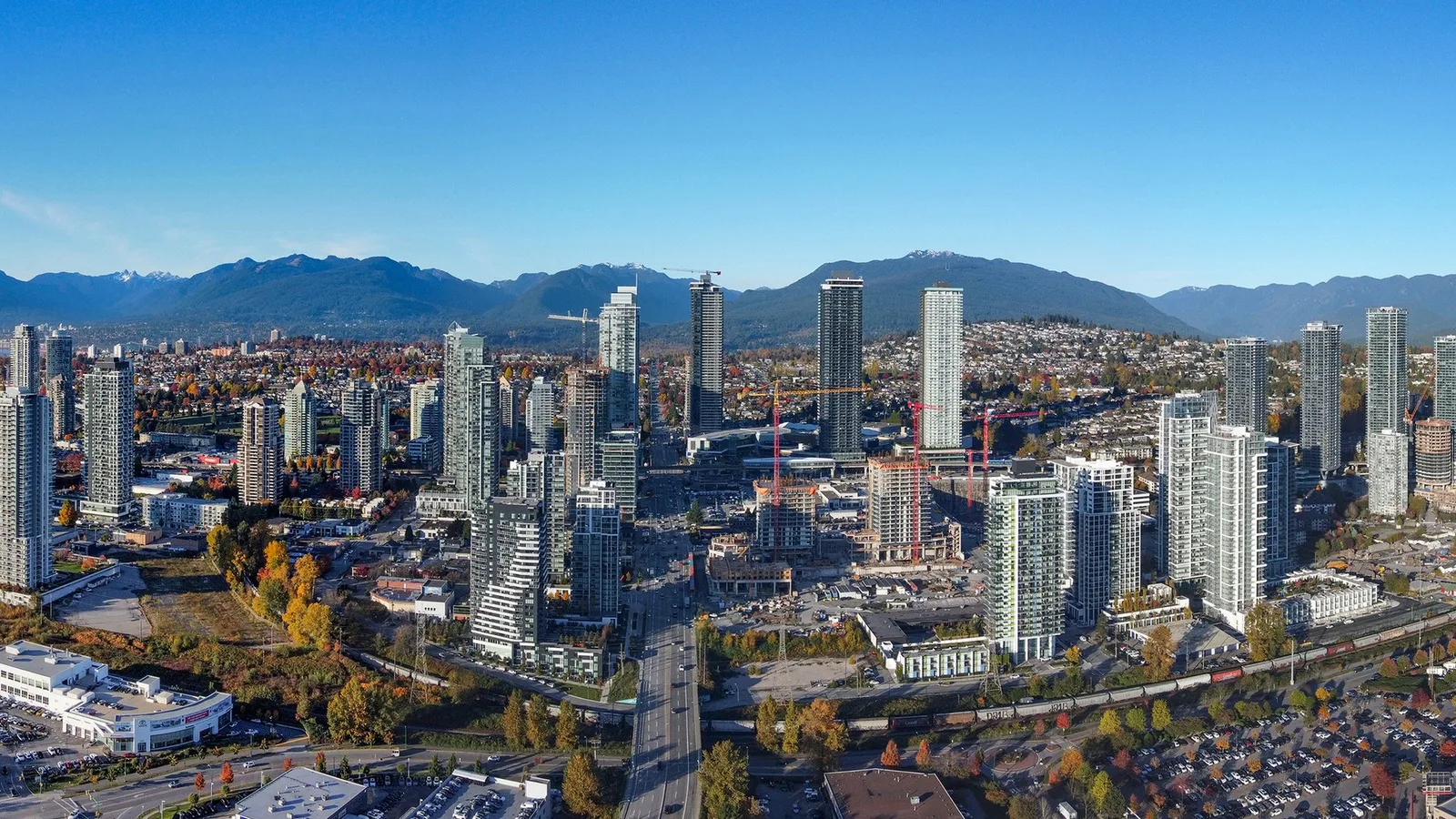
Brentwood has seen the most concentrated new construction of Burnaby's town centres in recent years, with towers built up around the Brentwood Town Centre mall and SkyTrain station as the area has been steadily redeveloped. If a brand-new building with modern floorplans and amenities matters more to you than an established neighbourhood feel, this is where that trade-off tips in your favour.
Best for: families prioritizing newer construction and modern building amenities, who are comfortable with a town centre still mid-transformation rather than fully built out.
Each one answers a different question
Metrotown offers a wider range of building ages in a town centre that is largely built out. Brentwood offers newer buildings in a town centre still under construction around them.
Put in terms of what you can find out before you buy, the difference is documentary. An older building has a history you can read. A new one has a plan you have to trust.
Burnaby's four town centres, and why they differ
Burnaby has four town centres: Brentwood, Edmonds, Lougheed and Metrotown. Each has its own community plan, and the dates those plans were adopted go a long way to explaining why the four areas feel so different from each other today.
Metrotown's original plan dates from 1977, with a new plan adopted in 2017. Edmonds followed in 1994, with a new community plan adopted in March 2025. Brentwood's plan dates from 1996 and Lougheed's from 1997. Our Edmonds and South Burnaby buyer's guide covers the town centre with the newest plan.
That sequence is visible on the ground. Metrotown has had nearly fifty years of planned growth and several generations of building stock. Brentwood's concentrated tower construction came later, which is why so much of its housing is new.
For a buyer, the plan matters for one specific reason: it describes what is expected to be built around a property over the coming years. A unit with a clear outlook today may not keep it, and the plan is where that question gets answered rather than guessed at.
If you would rather live near the Metrotown towers than in one, the Deer Lake and Central Park buyer's guide looks at the low-density streets around the two parks, and thinking about a multiplex home in Burnaby explains what Burnaby's zoning now allows for multiplex homes.
The difference that actually shows up in your documents
This is the part of the comparison that moves a decision, and it rarely appears in a neighbourhood guide.
When you buy a strata unit, the useful information is in the documents. An older Metrotown tower will have years of council and general meeting minutes, a contingency reserve fund with a history, a record of what has been repaired and what has been deferred, and a depreciation report with funding models you can compare against the actual budget.
A brand-new Brentwood tower has none of that. What it has is a developer's disclosure statement and the bylaws being registered. You are assessing a plan rather than a record.
Neither position is safer in the abstract, and the questions you ask should differ:
For the older building. Get two years of minutes and read them with the depreciation report open beside them. Trace every component the report gave a short remaining life. Check the reserve fund balance against the report's funding models. Look for levies proposed, approved or voted down, and for any building envelope assessment.
For the new building. Read the disclosure statement and the proposed budget, and understand that a first-year budget is an estimate made by the developer rather than a figure tested by operating the building. Ask what the warranty covers and for how long. Ask when the first annual general meeting is scheduled, because that is when the owners take over.
The depreciation report rules, and the dates that have passed
Two figures make this concrete.
British Columbia requires a depreciation report on a five-year cycle for strata corporations with five or more strata lots. Corporations with four or fewer are exempt, and the option to defer by an annual three-quarter vote was removed in 2024.
Strata corporations in Metro Vancouver had to obtain their first report under the current rules by July 1, 2026. That date has passed. So an older Metrotown or Brentwood tower should already hold a current report, and if the documents you receive do not include one, that is a question rather than a gap to accept.
A corporation created on or after July 1, 2024 and before July 1, 2027 must obtain a report within two years of its first annual general meeting. A new Brentwood tower selling now may therefore be a year or two away from having one at all.
When you do have a report, the three cash-flow funding models it must contain are the most useful pages in it. Compare the current reserve fund balance against each model's path for this year, and ask the council which model the strata has adopted.
The taxes on a new unit
A newly built Brentwood condo is new construction, which changes your closing costs in two ways that an older Metrotown unit does not carry.
GST applies at 5%, with rebates depending on price and circumstances. Where it is payable and not financed, it is due on completion day.
Property transfer tax may be removed by the Newly Built Home exemption: a full exemption where fair market value is $1,100,000 or less, partial up to $1,150,000, on thresholds effective April 1, 2024. The unit must never have been occupied since construction, and you must move in within 92 days of registration and stay for the rest of the first year.
Resale units do not attract GST, and they do not qualify for that exemption. Run the closing cost numbers for the specific unit rather than comparing two purchase prices, because on a new unit these two lines can move the cash you need by tens of thousands of dollars.
What we'd tell you before you write an offer
Walk both at a normal weekday hour. Metrotown's mall traffic shapes the streets around it on a weekday evening, and Brentwood's ongoing construction shapes noise, dust and pedestrian routes during working hours. A Saturday afternoon visit tells you about neither.
Then confirm the school catchment for the specific address with the Burnaby school district, since catchments are set by address and they change. And read the relevant community plan for what is expected to be built next to the building you are considering, because a clear outlook today is not a permanent feature of the unit.
Plan your next step
Use the home-buying guide to organise your search. Prepare your property questions, check the actual neighbourhood routes, and keep evidence separate from preferences when comparing homes.
Frequently asked questions
How many town centres does Burnaby have?
Four: Brentwood, Edmonds, Lougheed and Metrotown. Each has its own community plan, and the plans were adopted at different times, which is part of why the four areas look and feel so different today. Metrotown's original plan dates from 1977 with a new plan adopted in 2017, Edmonds from 1994 with a new community plan adopted in March 2025, Brentwood from 1996 and Lougheed from 1997.
What is the real difference between buying in Brentwood and Metrotown?
Each answers a different question. Metrotown offers a wider range of building ages, which means towers with a documented history you can read before you buy. Brentwood offers newer buildings, which means modern plans and no operating history at all. The choice is between evidence about a specific building and the condition of a new one.
Why does building age matter more than it looks?
Because it determines what documents exist. An older tower has years of minutes, a reserve fund with a track record, a repair history and a depreciation report with funding models you can compare against the actual budget. A brand-new building has a developer's disclosure statement and little else, so you are assessing a plan rather than a record.
Will a new Brentwood building have a depreciation report?
Eventually, and probably not when you buy. British Columbia requires a depreciation report on a five-year cycle for strata corporations with five or more strata lots, and a corporation created on or after July 1, 2024 and before July 1, 2027 must obtain one within two years of its first annual general meeting. A tower selling now may be a year or two away from having one.
Should an older Metrotown tower have a depreciation report already?
Yes. Strata corporations in Metro Vancouver with five or more strata lots had to obtain their first report under the current rules by July 1, 2026, and that date has passed. Deferral by an annual three-quarter vote was removed in 2024, so a building of that size has no route to going without one. If the documents you receive do not include a current report, ask why.
What should I look for in a depreciation report on an older tower?
The report must include at least three cash-flow funding models for the contingency reserve fund over 30 years. Find them, then compare the current reserve fund balance and the current budget against each model's path for this year. Where the balance sits well below every model, the building is heading toward levies whatever else the documents say.
Do I pay GST on a new Brentwood condo?
New construction attracts 5% federal GST, and a newly built condo is new construction. Rebates can reduce or remove it depending on the price and your circumstances. Where GST is payable and you are not financing it, it falls due on completion day with your other closing costs, which is why it belongs in your cash plan rather than your mortgage calculation.
Is there a property transfer tax exemption on a new unit?
The Newly Built Home exemption gives a full exemption where fair market value is $1,100,000 or less and a partial exemption up to $1,150,000, on thresholds effective April 1, 2024. The unit must never have been occupied since construction, and you must move in within 92 days of registration and occupy it as your principal residence for the rest of the first year.
What is the best time of day to visit each one?
A normal weekday, because that is when the two areas differ most from a weekend impression. Metrotown's mall traffic shapes the streets around it on a weekday evening. Brentwood's ongoing construction shapes noise, dust and pedestrian routes during working hours. A Saturday afternoon visit tells you about neither.
Which one is better for families?
The better area for a family is the one that fits the constraints that cannot change for that household. Confirm the school catchment for the specific address with the Burnaby school district, since catchments are set by address and change. Then time your regular trips from each address at the hours you actually make them, and compare the results rather than the reputations.