
Buying a House With a Laneway House in Vancouver: What You Own, What You Can Rent
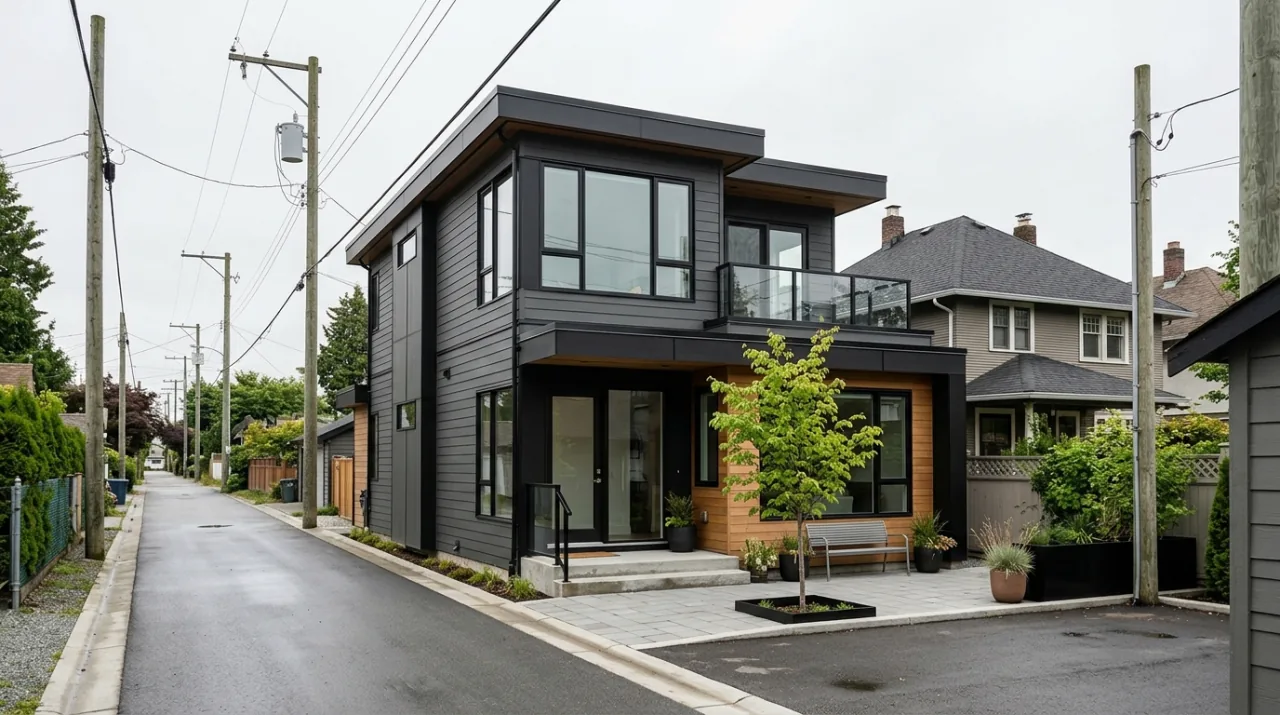
Buyers see a house with a small building behind it, facing the lane, and start doing the math on two properties.
There is one property. That is the fact everything else in this post runs through.
What a laneway house is
A laneway house is a small detached dwelling at the back of a standard lot, usually where the garage would sit, with its entrance facing the lane.
Vancouver Council adopted laneway housing regulations in July 2009, for the single family districts that covered most of the city's single family lots. The rules have since been carried into the current R1-1 zone, which is the residential zoning across most of Vancouver's low density neighbourhoods.
The ownership rule that decides everything
City of Vancouver rules are direct on this point: a laneway house cannot be strata-titled or sold separately from the main house.
It stays on the same title. One legal property, one mortgage, one property tax bill, one set of land title records.
So the laneway house is a rental unit or family housing. It never becomes a second thing you can sell. When you list the property later, you sell both buildings together to one buyer.
This matters more than it first sounds. Buyers sometimes value the laneway house as though it were a separate small home with its own price. The correct way to value it is as rental income and extra living space attached to the house you are buying.
Three dwellings on one lot
Vancouver has allowed a secondary suite in a single detached house since 2004, and a laneway house since 2009. The two can exist on the same lot.
A new laneway house can be built on a site with an existing single detached house, or built together with a new house, and that main house can also contain a secondary suite.
That gives you the arrangement many buyers are actually shopping for:
- The main house, where you live
- A secondary suite, usually in the basement, rented
- A laneway house, at the rear, rented or used by family
Three households, one title, one mortgage. Two rents coming in.
The multiplex question
R1-1 also permits a multiplex, a small building of ground-oriented homes on a single lot. Vancouver's multiplex rules allow 3 to 6 ownership units, or up to 8 secured rental units, on one lot. Site assembly is not permitted for these projects, so a multiplex is built on the single lot as it stands.
Here is the difference that changes the arithmetic for some owners. Multiplex units built as strata can be owned and sold individually. A laneway house cannot be.
For an owner deciding what to do with an older house on a standard lot, that is the fork in the road. A laneway house adds rent to a property you keep. A multiplex creates homes that can be sold one at a time. We go through what the multiplex path involves in the Cambie Corridor multiplex guide.
As a buyer, this affects you in a second way. If the lot you are buying could support a multiplex, some of what you are paying is land value tied to that option rather than to the house in front of you.
What to verify before you write an offer
The permit and the final inspection. Ask for the building permit and proof that the final inspection was approved. Occupancy follows the approved final inspection. A laneway house standing without those records is an unpermitted dwelling, and it becomes yours at completion along with anything the City may require to fix it.
The size and the room layout. Vancouver sets minimum sizes for a laneway house rather than letting anything be built. The by-law sets a floor area minimum and minimum dimensions for the main habitable room and the bedroom. Read the approved plans and compare them to what is standing.
The parking. On-site parking has been part of the laneway housing program since it started. Because the laneway house often occupies the old garage footprint, find out where parking sits now for both dwellings, and whether it matches the approved drawings.
Whether anyone lives there, and on what terms. If a tenant is in place, the tenancy comes with the property. The rent, the term and the notice rules are set already. If you intend to live in the laneway house yourself, or move family in, the timing is governed by tenancy law rather than by your completion date. Buying a tenanted home in BC sets out how the notice and the compensation work.
The utilities. Ask whether the laneway house has its own meters for electricity, gas and water. Separate meters let you bill the tenant for what they use. A shared meter means you pay and recover it through the rent.
Financing and insurance
Lenders count part of the rent, not all of it. Every lender has its own method. Some add a share of the expected rent to your income. Others subtract the rent from your housing costs, which moves your ratios differently. The result is that the same property and the same income can produce different approvals at different lenders.
Two practical steps: get the rent figure documented, through a lease or a market rent opinion, and ask your broker to run your file at more than one lender before you set a price ceiling. How the ratios work in the first place is covered in the mortgage stress test explained.
Insurance needs to describe what is there. You have two buildings on one lot, one of them occupied by a tenant. Tell the insurer that plainly when you get a quote. A policy written as though the property were a single detached house with no tenant may not respond the way you expect on a claim, and premiums for a property with a rental unit sit higher than for the same house without one.
Tax and declarations
Property tax is billed on the property as a whole. A laneway house raises the assessed value, because there is more improvement on the land, and the tax follows the assessment. What your own assessment measures, and why it differs from market value, is covered in BC Assessment vs market value.
The Speculation and Vacancy Tax declaration is filed by every owner of residential property in a designated taxable area, each year, even when nothing is owed. Where a property has more than one owner, each owner files a separate declaration. Two dwellings on one lot does not create a second declaration for the property. What it does mean is that the exemption you claim has to match how both buildings are used, so read the exemption wording against your actual situation. We cover the declaration in the BC Speculation and Vacancy Tax explained.
Rental income is taxable income. Rent from the laneway house goes on your return, and you can claim expenses against it. Renting out part of your property can also affect the principal residence treatment when you sell. Ask an accountant before your first rented year, rather than in the year you list.
The maintenance you are taking on
A second building has a second roof, second set of gutters, second furnace or heat pump, second hot water tank and its own plumbing runs. All of it ages on its own schedule.
Two things follow. Budget for the second building separately rather than folding it into the main house's reserve. And on inspection day, have the inspector walk the laneway house properly, including the roof and the mechanical equipment, instead of treating it as an outbuilding.
Buying a Vancouver house with a laneway house: the key points
- A Vancouver laneway house cannot be strata-titled or sold separately from the main house.
- You buy one property with two buildings, one title, one mortgage.
- A lot can commonly hold a main house, a secondary suite and a laneway house.
- Multiplex units can be sold individually, which is the real alternative for some lots.
- Verify the permit, the final inspection, the parking and any tenancy before you write.
- Lenders count part of the rent, and the part differs by lender.
- Tell your insurer there are two buildings and a tenant.
- Contact our team to check the permit history on a specific address, or browse listings.
Plan your next step
Work through neighbourhood checks for the lane itself, the parking and the traffic behind the property, and use the home-buying guide to line up your financing before you start viewing laneway properties.
Frequently asked questions
Can a laneway house be sold separately from the main house?
No. City of Vancouver rules state that laneway houses cannot be strata-titled or sold separately from the main house. The laneway house stays on the same title as the main building, which means one property, one mortgage and one property tax bill. You are buying a house that happens to have a second dwelling behind it.
What is a laneway house?
It is a small detached dwelling built at the rear of a standard lot, usually facing the lane where a garage would sit. Vancouver Council adopted laneway housing regulations in July 2009 for the single family districts that made up most of the city's single family lots. The rules have been carried into the current R1-1 zone.
Can a lot have a secondary suite and a laneway house at the same time?
Yes, this combination is common. A new laneway house can be built on a site with an existing single detached house, or together with a new one, and that main house can also contain a secondary suite. That produces the three-dwelling arrangement many buyers are looking at: main house, basement suite, laneway house.
Will a lender count the laneway rent toward my mortgage?
Lenders count a portion of the expected rent, and the portion differs between lenders. Some add a share of the rent to your income, others subtract the rent from your housing costs, and each method produces a different qualifying number. Ask your broker to run your file with more than one lender before you set your price ceiling.
What should I check about the permit before making an offer?
Ask for the building permit and confirmation that the final inspection was approved, because occupancy follows the approved final inspection. A building that exists without those records is an unpermitted dwelling you take on at completion. Your realtor can request the permit history from the City for the address.
Does a laneway house need a parking space?
Vancouver's laneway housing program has included on-site parking provision since it began, and the requirement depends on the lot and the current zoning rules. Because the laneway house often occupies the space where a garage stood, confirm where parking is provided for both dwellings. Ask the listing agent and check the approved plans.
Can I put a family member in the laneway house instead of renting it?
Yes. The rule restricts separate ownership rather than who lives there, so a laneway house works as housing for a parent, an adult child or another relative. Many owners use it that way. If you plan to charge rent to a family member, treat it as a tenancy and keep proper records.
How does a laneway house affect the Speculation and Vacancy Tax?
Every owner of residential property in a designated taxable area files a declaration each year, and where a property has more than one owner each owner files separately. Having two dwellings on one lot does not create a second declaration for the property. Check that the exemption you claim matches how both buildings are actually used.
Are the utilities separately metered?
Sometimes, and the answer is specific to each property, so verify it before you buy. Separate meters let you bill a tenant directly for what they use. A shared meter means you pay and either build the cost into the rent or split it by agreement, which is worth pricing before you sign.
Does a laneway house add to resale value?
It adds a second dwelling and the rent that comes with it, which widens the buyer pool to people who need the income or need space for family. It also narrows the pool in one way, because some buyers do not want a tenant in the back yard. The permit records, the condition of the building and the terms of any existing tenancy all affect what the next buyer will pay.