
Ambleside and Dundarave: A Buyer's Guide to West Vancouver's Walkable Waterfront
Buyers call me about West Vancouver's waterfront and describe it as one neighbourhood. It is two, sitting two kilometres apart on the same strip of Marine Drive, and they price and feel differently.
Here is how to tell them apart before you write an offer.
Where the two villages sit
Ambleside is the eastern of the pair and the larger one. It starts near the foot of the Lions Gate Bridge and runs west along Marine Drive. West Vancouver's Official Community Plan names Ambleside as the District's municipal town centre, the civic and commercial heart of the municipality. That is where the grocery stores, the banks, the community centre, Ambleside Pier and Ambleside Park are.
Ambleside Park is the largest waterfront park in the area. It has a sandy beach with a lifeguarded swim area in summer, a playground, a pitch and putt golf course, a skate area, pickleball courts and outdoor fitness equipment.
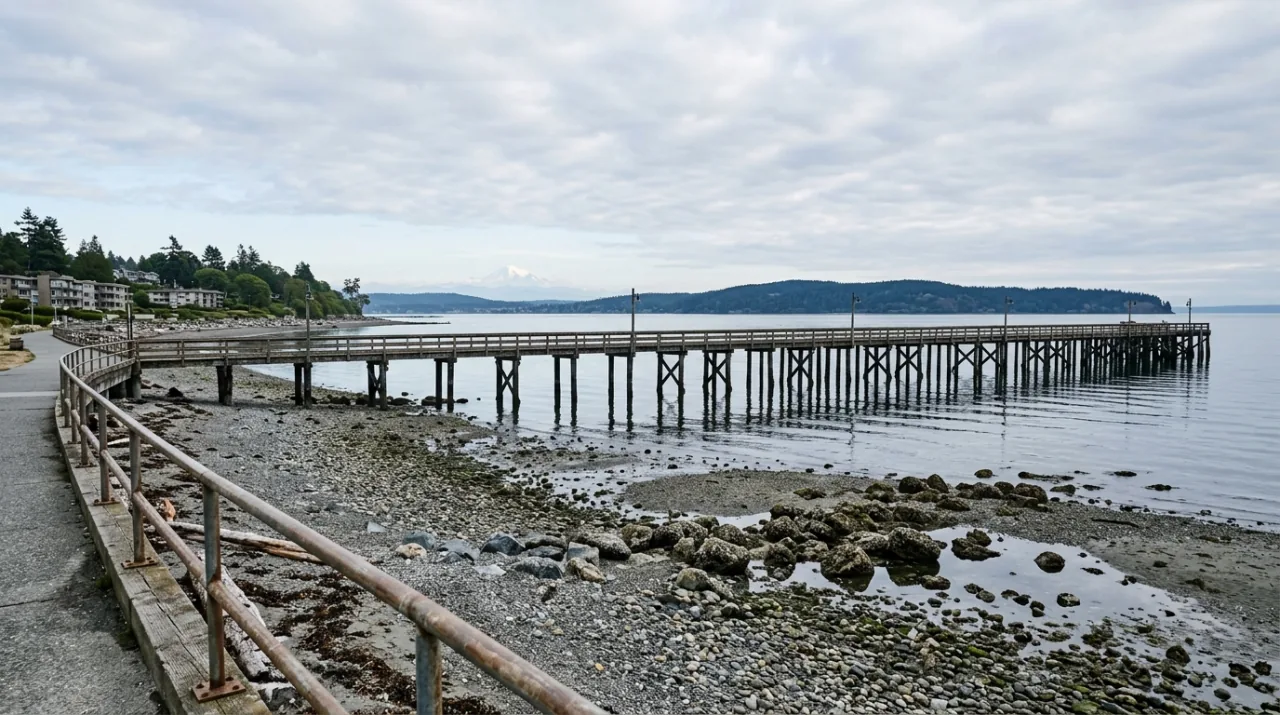
Dundarave sits west at the foot of 25th Street. The shopping street is short, a few blocks of small businesses, cafés and restaurants rather than a full town centre. Dundarave Park has more than 50 metres of sandy beach, its own pier, a playground and a lifeguarded swim area in summer.
The practical difference: in Ambleside you can do a full week of errands on foot. In Dundarave you can buy a coffee and a few groceries, and you drive or take the bus for the rest.
The seawalk between them
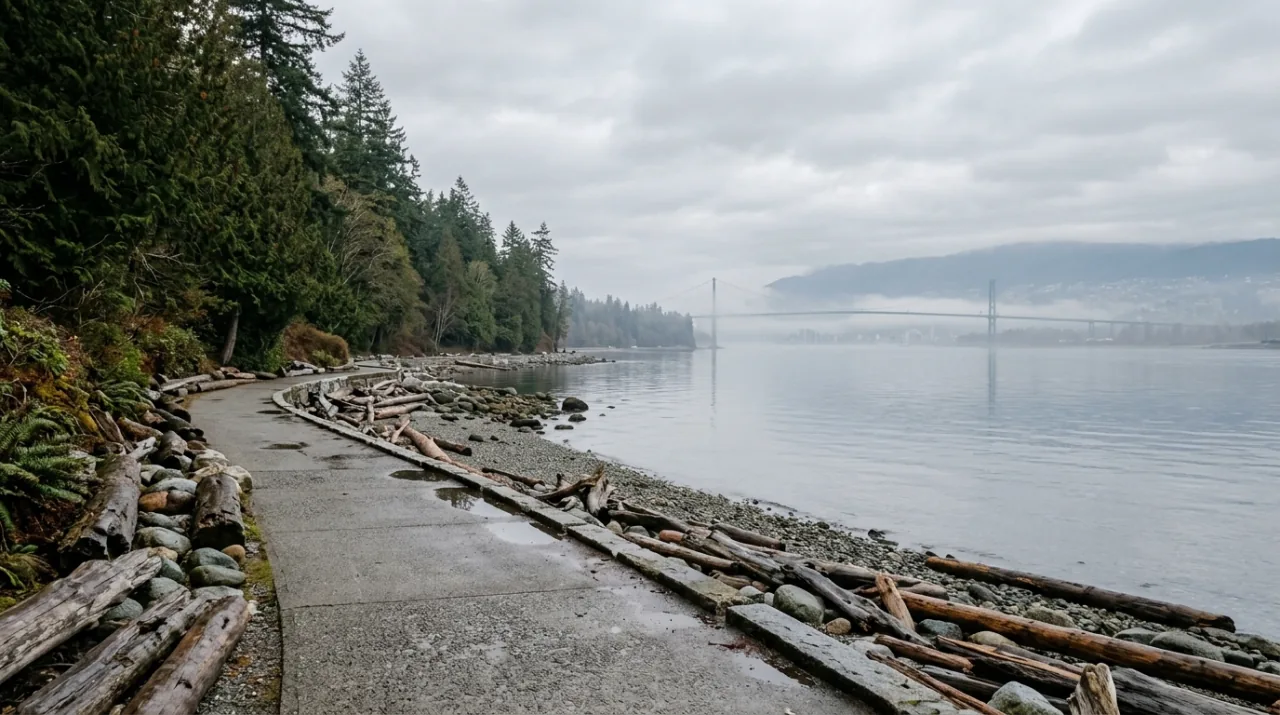
The Centennial Seawalk runs 1.7 kilometres from the bottom of 18th Street, west of John Lawson Park, to Dundarave Park at 25th Street. It is paved and level, with the water on one side and the Vancouver skyline across the inlet.
This path is the reason the area reads as walkable at all. The land behind Marine Drive rises steeply, so almost everything else in West Vancouver involves a hill. The flat strip along the water is the exception, and homes within a few blocks of it carry a premium for that reason.
Leashed dogs are allowed on the seawalk, which was a change the District made in recent years.
The housing mix
Three distinct types of property sit within a short walk of each other here.
Older low-rise apartments. Along Marine Drive and Bellevue Avenue there is a real supply of low-rise buildings, many from the 1960s and 1970s. Suites in them are often larger than a comparable new build, with bigger rooms and more storage. They also come with the maintenance profile of a building past the fifty year mark.
Newer buildings. A smaller number of newer projects have been added through rezoning. The Official Community Plan sets out an Ambleside Apartment Area allowing residential forms up to 15.24 metres, which is four storeys, at a floor area ratio of 1.75, with more height and density considered for seniors housing on qualifying sites. Applications above that come through rezoning and are decided case by case, so a proposal near a home you are buying is worth reading before you commit.
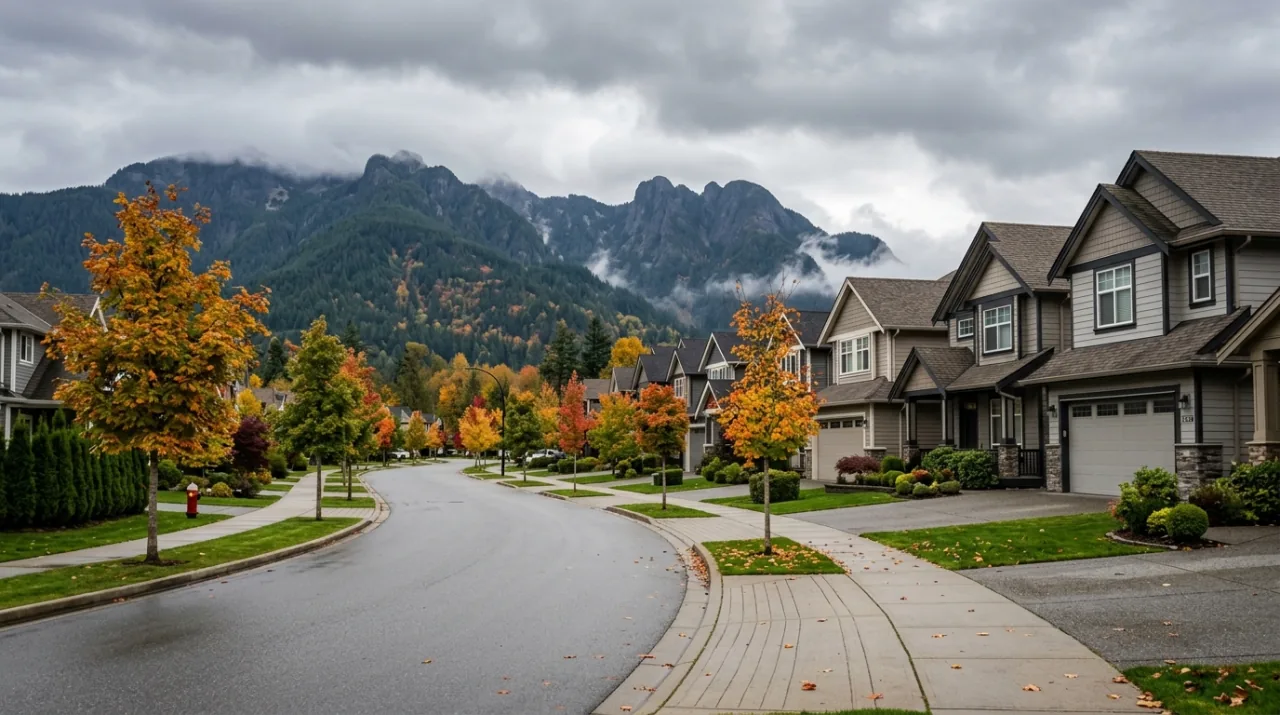
Detached homes on the hillside. North of the commercial strip the streets climb. Lots get larger, and the view widens as you rise. This is where most of West Vancouver's value sits, and where the pricing logic is hardest for buyers arriving from elsewhere in the region.
Why the detached market behaves differently
Four things separate West Vancouver's house market from Burnaby, Coquitlam or the east side of Vancouver.
Lot sizes are larger. Comparable analysis has to account for land in a way it does not in a neighbourhood of uniform 33 foot lots.
View position drives price. Two houses on the same street, one block apart, can differ in value because one sits above the roofline of the house in front and one does not. A view that a neighbour's future renovation could block is worth less than a protected one. This is the single most common thing buyers underestimate here.
The owner base is older. West Vancouver's median age is well above the regional figure, and the share of residents who are seniors has grown over the past two decades. That shapes turnover: homes are held longer, and many sales come from estates or from owners downsizing into the apartment stock on the flat.
Council has held a slow-growth position. For years West Vancouver approved less new housing than neighbouring municipalities, which kept supply tight.
That last point is actively contested right now. The District adopted a small-scale multi-unit housing bylaw in August 2024 after provincial Bill 44. The Province then passed Bill 25 in November 2025, changing what municipalities must allow, with a compliance deadline of June 30, 2026. West Vancouver did not meet it. In June 2026 the Minister of Housing wrote to the District confirming the Province can impose a zoning override, and Council directed staff to prepare amendments. Readings of Amendment Bylaw No. 5446, 2026 were set for September 21, 2026.
If you are buying land here with any thought of adding units, read the District's current page on this before you write an offer. The rules are moving. Our North Vancouver multiplex guide covers how the same provincial rules landed on the other side of the Capilano River, where the process is further along.
Trees and what you can build
West Vancouver regulates tree cutting on private land through its Tree Bylaw, and this catches renovation buyers off guard.
Protected trees include any tree inside a Watercourse Protection Area or a Foreshore Protection Area. They also include certain species over 20 cm in diameter at breast height: Arbutus, Garry Oak, Pacific Yew, Pacific dogwood and Yellow cedar.
Cutting a protected tree generally requires a permit, supported by a report from a professional arborist, and permission is tied to either redevelopment of the property or a hazard finding. Review of a completed application takes a few weeks.
The practical effect on a hillside lot: the trees that partly block your view may be the trees you cannot remove. Work out what is protected before you pay a premium for a house you plan to open up.
Height, setbacks, lot coverage and floor area are set by Zoning Bylaw No. 4662, and they vary by zone. On a sloping lot, how height is measured matters as much as the number itself.
The commute
Everything about getting downtown from here runs through one crossing.
The Lions Gate Bridge has three lanes. The centre lane reverses direction, controlled by operators who watch traffic, weather and visibility around the clock. A typical weekday runs two lanes southbound in the morning and two lanes northbound in the afternoon, adjusted as conditions change. Outside those periods the drive downtown is short. Inside them it is unpredictable, and there is no parallel route that helps. The alternative is the Ironworkers Memorial Bridge, which means driving east across the whole North Shore first.
Buses. The 250 runs along Marine Drive between Horseshoe Bay, Dundarave and downtown Vancouver. Most trips operate as the 250A to Dundarave and form part of TransLink's Frequent Transit Network. The 253 links Caulfeild and Park Royal to Vancouver. Both cross the same bridge, so both sit in the same traffic.
The SeaBus. From Lonsdale Quay in North Vancouver the SeaBus crosses to Waterfront Station and connects to the SkyTrain. It avoids the bridge completely. Getting to Lonsdale from Dundarave takes a drive or a bus trip east, so this works best for people who commute at fixed times and can build the transfer into their routine. Our Lower Lonsdale condo buyer's guide covers that side of the water for buyers weighing the two.
The age profile and what it means for condos
West Vancouver's population is older than the region as a whole. That has a direct effect on the apartment stock.
Many buildings hold a high share of long-term owners on fixed incomes. Owners in that position often vote against strata fee increases and against large contingency contributions. Over time that produces a building with a low monthly fee and a reserve fund too small for the work the building needs.
So read two documents before you buy into an older building on the flat.
The depreciation report. It lists the major components, their remaining life and the projected cost of replacing them. Buildings from the 1960s and 1970s are at the stage where the exterior envelope, roof, windows and plumbing come due.
The contingency reserve fund balance, read against that report. A healthy balance means the money is being collected. A thin one against a long list of near-term work means a special levy is coming, and you will own it.
A low strata fee in an old building is a warning rather than a saving. We cover how to read these documents in reading a strata depreciation report.
Schools
West Vancouver Schools, School District 45, runs the public schools and also serves Lions Bay and Bowen Island. Hollyburn, Irwin Park and Ridgeview are elementary schools in this part of the District, and West Vancouver Secondary on Mathers Avenue covers grades 8 to 12.
Catchment boundaries change, and they do not follow neighbourhood names. Confirm the catchment for the exact address with the school district rather than relying on a listing description.
The trade-offs
Bridge dependence. One crossing carries almost all of your trips to the city. An incident on it changes your evening. Test the drive at the hour you would actually make it.
Older buildings need envelope work. The apartment stock on the flat is largely from the 1960s and 1970s. Budget for a levy in a building that has not done its exterior yet.
Hillside access in snow. The streets above Marine Drive are steep, and elevation here means more snow than at sea level. Winter tires are practical equipment. Check how steep the final approach to a driveway is.
Thin inventory. Fewer detached sales happen in a year than in comparable areas, so the pool of recent comparable sales for pricing is smaller. That makes an agent's read of the specific street more important than a broad market average.
Buying in Ambleside and Dundarave: the key points
- Ambleside is the town centre, larger, closer to the bridge, with the main shops and the bigger park.
- Dundarave is smaller and quieter, at the foot of 25th Street, with its own pier and beach.
- The Centennial Seawalk runs 1.7 kilometres between them, from 18th Street to Dundarave Park.
- Housing splits into older low-rise apartments on the flat and detached homes on the hillside where view position sets price.
- Tree cutting on private land is regulated, and protected trees may be the ones blocking your view.
- Small-scale multi-unit housing rules are unresolved as of September 2026. Verify the current bylaw before buying for density.
- The Lions Gate Bridge has three lanes with a reversible centre lane, and no useful alternate route.
- In older buildings, read the depreciation report and the contingency reserve fund before the strata fee.
- Contact our team to walk specific streets and compare view positions, or browse listings.
Plan your next step
Work through neighbourhood checks before you commit to one village over the other, and test the commute at the hour you would drive it. If you are looking at the apartment stock along Marine Drive or Bellevue, strata review sets out the documents that decide whether a low monthly fee is real.
Frequently asked questions
What is the difference between Ambleside and Dundarave?
Ambleside is the larger of the two and is West Vancouver's designated municipal town centre, sitting closer to the Lions Gate Bridge with the main shops, the community centre, Ambleside Park and Ambleside Pier. Dundarave is two kilometres west at the foot of 25th Street, with a shorter shopping street, its own pier and beach, and a quieter feel in the evenings. Both sit on the same waterfront and are joined by the Centennial Seawalk.
How long is the Centennial Seawalk?
The District describes it as a 1.7 kilometre route running from the bottom of 18th Street, west of John Lawson Park, to Dundarave Park at 25th Street. It is paved and level, which is what makes this stretch of West Vancouver genuinely walkable compared with the hillside above. Leashed dogs are permitted on it.
What kind of housing is in Ambleside and Dundarave?
Three broad types. Low-rise apartment buildings along Marine Drive and Bellevue Avenue, many of them built in the 1960s and 1970s. A smaller number of newer buildings added through rezoning in recent years. Detached homes on the streets climbing the hillside behind the commercial strip, where the lots get larger and the views open up as you go north.
Why does the West Vancouver detached market behave differently?
Lot sizes are larger than in most of Metro Vancouver, the owner base skews older, and the District has held a slow-growth position on density for many years. That combination means fewer listings turn over in a given year and a single sale carries more weight in a comparable analysis. View position also creates price gaps between houses that look similar on paper.
Can I cut down trees on my West Vancouver property?
Not without checking the Tree Bylaw first. The District regulates tree cutting on private land, and protected trees include those within a Watercourse Protection Area or Foreshore Protection Area, plus certain species over 20 cm in diameter such as Arbutus, Garry Oak, Pacific Yew, Pacific dogwood and Yellow cedar. Removing a protected tree generally requires a permit supported by an arborist report. Confirm the current rules with the District before you buy a property on the assumption you can clear it.
Does West Vancouver allow multiplexes?
This is unsettled as of September 2026. The District adopted a small-scale multi-unit housing bylaw in August 2024, then the Province passed Bill 25 in November 2025 changing the requirements, with a compliance deadline of June 30, 2026 that West Vancouver did not meet. Council directed staff to prepare amendments and set readings of Amendment Bylaw No. 5446, 2026 for September 21, 2026. Check the District's current position before making any purchase that depends on building extra units.
How long is the commute to downtown Vancouver?
The drive runs over the Lions Gate Bridge and through the Stanley Park Causeway. The bridge has three lanes with a reversible centre lane that operators change through the day based on traffic, so capacity in your direction shifts with the time you travel. Outside peak periods the trip is short. During peak it varies a great deal, and there is no parallel route that avoids the bridge without a long detour to the Ironworkers Memorial Bridge.
What transit serves Ambleside and Dundarave?
The 250 runs along Marine Drive between Horseshoe Bay, Dundarave and downtown Vancouver, and most trips operate as the 250A to Dundarave, which is part of TransLink's Frequent Transit Network. The 253 connects Caulfeild and Park Royal to Vancouver. A second option is driving or taking a bus to Lonsdale Quay in North Vancouver and using the SeaBus, which avoids the bridge entirely.
What should I check in an older West Vancouver strata?
The depreciation report and the contingency reserve fund balance. Buildings from the 1960s and 1970s reach the point where the exterior envelope, the roof, the windows and the plumbing need replacing, and those projects are expensive. A low monthly strata fee in an old building with a thin reserve fund often signals a special levy ahead rather than good management.
Which schools serve these neighbourhoods?
West Vancouver Schools, School District 45, operates the public schools. Hollyburn, Irwin Park and Ridgeview are elementary schools in this part of the District, and West Vancouver Secondary on Mathers Avenue serves grades 8 to 12. Catchment boundaries change, so confirm the catchment for a specific address with the district before you buy on the strength of a school.