
Leasehold Property in Metro Vancouver: What You Own and Why the Remaining Term Decides Everything
A buyer asked me last month why a leasehold townhome was priced well below the freehold one on the next street. Same size, same year, same finishes.
They were looking at two different products. One buyer gets land with no end date. The other gets a fixed number of years of use, and those years are running down while they live there.
What you actually own
Freehold means you own the land and whatever sits on it, for as long as you want it.
Leasehold means you own the right to occupy the property until a specific date. Somebody else owns the land. That somebody is the leasehold landlord, and they hold what is called the head lease or ground lease, the master agreement that created the arrangement in the first place.
Your interest is registered at the Land Title and Survey Authority, same as a freehold title. You can sell it, mortgage it, and leave it to your children. It carries an expiry date.
Who the landlords are in Metro Vancouver
For strata leaseholds, the Strata Property Act restricts who may be the landlord. The list is public bodies only:
- the Province of British Columbia
- the Government of Canada
- local governments, including the City of Vancouver
- school districts
- universities
- BC Housing, through the Provincial Rental Housing Corporation
- the Nisga'a Nation and Nisga'a Villages, treaty First Nations, and the shishalh Nation
- four companies affiliated with First Nations
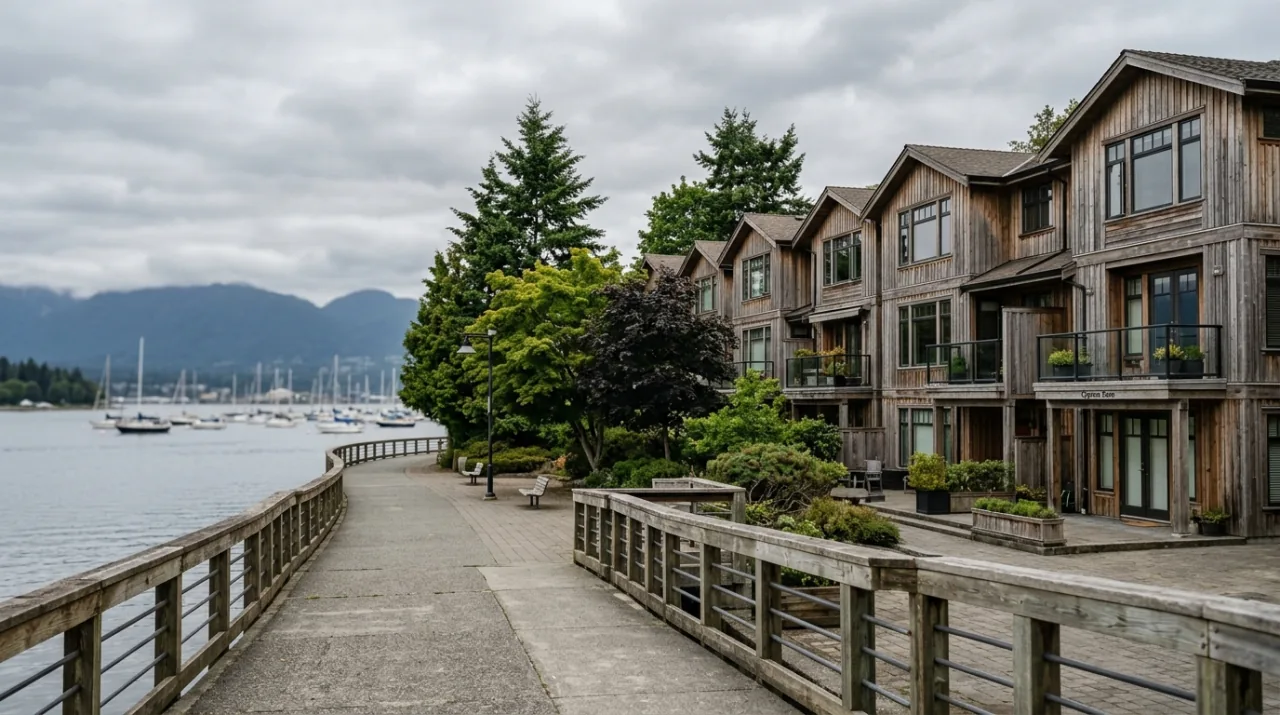
In practice, the leasehold homes you will run into around Metro Vancouver sit on city land, on university land, on federal land, or on First Nations land. False Creek South is the best known case of city land. When that neighbourhood was built in the 1970s and 1980s, much of the City land was leased out on 60-year ground leases.
University land around UBC works on a different model, with 99-year leases prepaid by the developer. Leases on First Nations reserve land were prepared by the federal government and follow their own structure, which often includes a rent review at a set interval.
The landlord matters because different landlords write different leases, and the lease is the document that decides your costs. Two leasehold homes a few kilometres apart can behave nothing alike.
Prepaid rent versus ongoing rent
This is the split that changes a monthly budget the most.
A prepaid lease means the developer paid the ground rent for the entire term at the start. Nobody pays rent again. You pay strata fees, property tax, utilities and insurance, and that is the whole monthly picture.
A lease with ongoing rent means somebody keeps paying the landlord for the use of the land, usually through the strata corporation, which then collects it from owners. That payment sits on top of your strata fee.
A partially prepaid lease is the third shape. Rent was covered for an early stretch of the term, and after that the lease sets a new rent.
The BC government describes all three arrangements on its strata leaseholds page. Which one applies to a specific home is written in the head lease, and nowhere else.
The rent review, and why it catches people
Leases that charge ongoing rent usually set review dates. On that date the rent is recalculated using a method the lease specifies, often tied to the land value at that time rather than to what the rent used to be.
Land in Metro Vancouver has climbed a long way since many of these leases were signed. A review that applies a fixed percentage to current land value can produce a payment nothing like the old one.
Two questions answer this before you buy:
- When is the next review date?
- How does the lease calculate the new rent?
If the second answer is not clear in one reading, that is the moment to involve a lawyer rather than after the offer is accepted.
Why the discount widens as the term shortens
A leasehold home is worth less than an equivalent freehold home because the buyer receives a limited number of years instead of permanent ownership. The BC government puts it plainly: the relative value of the lease tends to decline as the lease term approaches its termination date.
The discount grows as the years run out because three things happen at once.
Fewer lenders will fund it. More on that below, and it is the binding constraint.
Fewer buyers can buy it. A home only some lenders will finance draws from a smaller pool, and a smaller pool means less competition and a lower price.
The end gets close enough to matter. A buyer with 80 years left is not thinking about expiry. A buyer with 25 years left is doing arithmetic about what they get back.
I will not quote a percentage here, because the number depends on the specific lease, the specific building, and what lenders are doing that month. The pattern holds. The direction of the pattern is what you plan around.
The financing problem
This is where leasehold purchases fall apart, and it is worth understanding before you shop.
Standard mortgage instructions used across Canada ask that the remaining term of the lease exceed the amortization period by at least five years. A 25-year amortization needs 30 years of lease left. A 30-year amortization needs 35.
Lenders also read the head lease for their own protections. They want notice if the borrower defaults under the lease, a chance to fix the default themselves, and the right to a replacement lease if the original one is terminated. A lease missing those clauses can be declined regardless of how strong the borrower is.
CMHC insures mortgages on leasehold interests, with its own conditions on the lease term and the security. Your down payment, your credit and your income are only half the file. The lease is the other half, and it is the half you cannot change.
Plan for a longer approval. Give yourself more days on the financing subject than you would on a freehold purchase, because the lender's lawyer needs time with the lease. Our piece on what subject-free actually means covers the risk of removing that condition, and it is a larger risk here than on a standard condo.
The qualifying math is otherwise the same as any purchase. If you have not read how the stress test works, start there, because the tested rate sets your ceiling before the lease question even comes up.
What happens at the end
At expiry, the land and the building revert to the landlord.
The lease sets out whether the leaseholder receives a payment for the value of the improvements at that point. In False Creek South this payment has a name, the leasehold interest in the strata lot, and the City has described it as compensation for the fair market value of the improvements at lease end. The BC government also warns that a lease may set this compensation at zero.
Before expiry, three paths exist:
Renewal or extension by negotiation. The landlord agrees to more years, usually for a payment. The City of Vancouver has offered residential strata leaseholders in False Creek South the chance to extend their leases, which shows it happens. Each extension is its own negotiation at its own price.
A right written into the lease. Some leases grant an option to extend on stated terms. This is the strongest position to be in, and it is rare.
Reversion. The term ends, and the property goes back to the landlord under whatever compensation clause the lease contains.
The strata leasehold structure
Most leasehold homes you will see listed are leasehold strata lots, and the structure is worth picturing.
The public authority leases the land to a developer. The developer builds. On completion, the developer files a strata plan, which creates the strata corporation and the individual strata lots. Each sale to a buyer is an assignment of the developer's leasehold interest in that one strata lot.
Day to day, the strata corporation runs the way any strata does under the Strata Property Act: bylaws, a budget, a contingency reserve fund, an annual general meeting, a depreciation report. Everything in reading a strata depreciation report applies here without change.
One extra layer sits on top. Decisions about the land, the lease term and the ground rent belong to the head lease and the landlord, outside the strata's control. Read the strata documents the way you would for any building, then read the lease as a separate job.
Your checklist before an offer
Four items, in this order.
1. Find the expiry date. Order a title search through the Land Title and Survey Authority. The registered lease shows the start date and the term. Do this first, because it is cheap and it can end the conversation.
2. Find out whether rent is prepaid or ongoing. Ask the listing agent, then confirm it in the lease. A verbal answer is a starting point, never the answer.
3. Find the rent review date and the calculation method. If rent is ongoing or partially prepaid, this decides your future monthly cost. Get the exact clause.
4. Have a lawyer read the head lease. Not a summary, not the strata's description of it, the lease itself. The BC government advises prospective purchasers to consult a knowledgeable lawyer before buying a residential leasehold, and that advice is the whole point of this article.
Add one more if you are financing: talk to your broker about the specific property before you write, so the lease term is checked against the amortization you need. What lenders check at pre-approval covers the borrower side of that file.
Leasehold property in Metro Vancouver: the key points
- Freehold owns the land. Leasehold owns a fixed number of years while a public authority owns the land.
- In BC, a strata leasehold landlord must be a public body: a government, a school district, a university, BC Housing, or a First Nation.
- Ground rent is prepaid, ongoing, or partially prepaid, and the head lease is the only place that answer lives.
- A rent review date can reset an ongoing payment using current land value.
- Lenders generally want the lease to outlast the amortization by five years, which is why the discount widens as the term runs down.
- At expiry the property reverts to the landlord, and compensation for improvements may be substantial or may be zero.
- Get the expiry date from title, then have a lawyer read the head lease.
- Contact our team to check the lease terms on a specific address, or browse listings.
Plan your next step
Work through strata review for the building documents, then treat the head lease as a separate review on top of them. If you are still deciding between a leasehold unit and a freehold one, comparing homes sets out how to weigh features and costs that do not line up directly.
Frequently asked questions
What is the difference between freehold and leasehold?
A freehold owner holds the land and the building with no end date. A leasehold buyer holds the right to occupy the property for a fixed number of years, while the landlord keeps ownership of the land. Both are registered at the Land Title and Survey Authority, and both can be bought, sold and mortgaged, so the practical difference is the end date and what happens when it arrives.
Who can be a leasehold landlord in British Columbia?
For strata leaseholds the Strata Property Act limits the role to public authorities. That list includes the Province, the Government of Canada, local governments, school districts, universities, BC Housing, the Nisga'a Nation and Nisga'a Villages, treaty First Nations, the shishalh Nation, and four companies affiliated with First Nations. A private company cannot create a strata leasehold in BC.
What does a prepaid lease mean?
It means the developer paid the ground rent for the whole lease term up front, so individual owners pay no further rent to the landlord. Owners still pay strata fees, property tax, utilities and insurance. Check title and the head lease to confirm the prepayment covers the full remaining term rather than only part of it.
What is a rent review date?
It is a date written into the head lease when the ground rent is recalculated. The lease sets the method, which is often tied to the land value at that date rather than to the original rent. A review can raise a monthly payment by a large amount, so buyers should find the next review date and read the calculation method before making an offer.
Why do leasehold homes sell for less than freehold?
A buyer is purchasing a fixed number of years of use instead of permanent ownership of land. Fewer remaining years means less value, and the BC government notes that the relative value of a lease tends to decline as the term approaches its end. Uncertainty about renewal and the smaller pool of lenders and buyers add to the gap.
Can I get a mortgage on a leasehold property?
Yes, and the remaining term is the gate. Standard Canadian mortgage instructions ask that the remaining lease term exceed the amortization period by at least five years, so a 25-year amortization needs 30 years of lease remaining. Lenders also review the head lease for protections such as notice of default and the right to a replacement lease.
What happens when a leasehold expires?
The land and the building revert to the landlord. The lease may require the landlord to pay the leaseholder for the value of the improvements at that point, and the amount is set out in the original ground lease. The BC government warns that some leases set this compensation at zero, which is why the clause has to be read before purchase.
Can a lease be extended or renewed?
Only if the landlord agrees or the lease already grants a right to extend. The City of Vancouver has offered extensions to residential strata leaseholders in False Creek South, which shows extensions are possible, and each one is a separate negotiation with its own price. Never assume an extension will be offered on a property you are considering.
How do I find out how many years are left on a lease?
Order a title search through the Land Title and Survey Authority, or ask your agent or lawyer to pull it. The registered lease shows the commencement date and the term, which gives you the expiry date. Compare that date against the amortization you plan to use before you spend money on an inspection.
Do I still pay strata fees and property tax on a leasehold home?
Yes. A leasehold strata corporation operates under the Strata Property Act in the same way a freehold one does, with a budget, a contingency reserve fund, bylaws and an annual general meeting. You pay strata fees and property tax, and where the lease is not prepaid you also pay ground rent on top.